hacklink hack forum hacklink film izle hacklink
Home Blog Page 186

What to Eat to Prevent Dementia: A Science-Backed Guide to the Best Foods for Brain Health

Dementia, a term used to describe a group of cognitive disorders that affect memory, reasoning, and communication, poses one of the most pressing public health challenges of our time. While genetics and aging are primary risk factors, research increasingly supports the powerful role that diet plays in maintaining cognitive health and even reducing the risk of dementia. By making informed, science-based dietary choices, individuals can take proactive steps to protect their brain and promote lifelong mental acuity. This article provides an in-depth look at what to eat to prevent dementia, highlighting the best foods for brain health and examining how dietary patterns can serve as a key strategy in the fight against cognitive decline.

You may also like: How a Plant-Based Diet May Help Reduce Cancer Risk: What Science Says About Nutrition and Tumor Prevention

Understanding the Link Between Diet and Dementia

Scientific evidence continues to support the critical connection between diet and the development or prevention of neurodegenerative diseases such as Alzheimer’s and vascular dementia. This relationship hinges largely on inflammation, oxidative stress, vascular health, and the buildup of beta-amyloid plaques in the brain. Diets high in saturated fats, refined sugars, and ultra-processed foods are associated with increased brain inflammation and reduced cognitive function. Conversely, a dementia prevention diet rich in plant-based whole foods, healthy fats, and antioxidants has been linked to better memory, focus, and a lower risk of age-related mental decline.

Incorporating foods to prevent dementia into daily meals not only supports brain structure and function but also modulates key biological pathways associated with neurodegeneration. Emerging research highlights that some foods may help stave off dementia by directly influencing neuroplasticity, the brain’s ability to adapt and form new connections. Understanding these mechanisms reinforces the importance of a food-first approach to brain health.

A hardcover book and pen lie beside a candle on a beige surface in a dim indoor setting, evoking contemplative habits. This visually quiet composition reinforces the importance of cognitive engagement and restful practices to promote long-term brain health and prevent dementia.

Plant-Based Diets and Cognitive Longevity

The Mediterranean and MIND (Mediterranean-DASH Intervention for Neurodegenerative Delay) diets are two of the most extensively studied dietary patterns linked to dementia prevention. Both emphasize plant-based foods, whole grains, legumes, nuts, seeds, and moderate amounts of healthy fats from sources like olive oil and avocados. These diets are associated with a reduced risk of cognitive impairment and are considered foundational models for a dementia prevention diet.

Focusing on whole-food plant-based nutrition aligns with the principles of reducing saturated fat and cholesterol while increasing fiber, phytonutrients, and antioxidants—all of which are essential for reducing systemic inflammation and protecting against vascular damage, a key contributor to cognitive decline. For those looking for foods that fight dementia, prioritizing fruits and vegetables, particularly those rich in polyphenols and flavonoids, can be highly beneficial.

A hardcover book and pen lie beside a candle on a beige surface in a dim indoor setting, evoking contemplative habits. This visually quiet composition reinforces the importance of cognitive engagement and restful practices to promote long-term brain health and prevent dementia.

Top Brain-Protective Foods Backed by Science

Among the best foods to prevent dementia, leafy greens such as spinach, kale, and collard greens stand out for their high folate, vitamin K, and lutein content. These nutrients are associated with slower cognitive aging and improved memory. Berries, particularly blueberries and strawberries, are another powerhouse due to their potent antioxidant compounds that combat oxidative stress and inflammation—two key drivers of neurodegeneration.

Nuts and seeds, particularly walnuts, chia seeds, and flaxseeds, offer a plant-based source of omega-3 fatty acids, which are essential for brain cell membrane integrity. Omega-3s have been shown to reduce the buildup of harmful plaques and support communication between neurons. Whole grains such as oats, quinoa, and brown rice provide sustained glucose release, ensuring a steady energy supply to the brain without the blood sugar spikes associated with refined carbohydrates.

Fatty fish like salmon, sardines, and mackerel are well-known for their brain-boosting omega-3 content, though plant-based sources remain effective alternatives. Legumes such as lentils and black beans provide plant-based protein and fiber, supporting gut health and reducing systemic inflammation. These are essential foods to reduce dementia risk, particularly in populations with a predisposition to cardiovascular disease.

A thoughtful woman participates in a therapy session with a male therapist in a warmly lit office, both engaged in quiet communication. The emotional nuance and clinical setting directly support the theme of cognitive resilience and mental health as protective strategies against dementia.

Foods That May Help Stave Off Dementia Through Plaque Reduction

A key hallmark of Alzheimer’s disease is the accumulation of amyloid-beta plaques in the brain. Some studies suggest that certain foods may help remove plaque from the brain or at least reduce its formation. Turmeric, a spice containing the active compound curcumin, has shown promise in breaking down amyloid deposits and reducing oxidative stress in the brain. While more research is needed to establish causality, curcumin’s anti-inflammatory and antioxidant effects make turmeric a valuable addition to any dementia prevention diet.

Cruciferous vegetables like broccoli, Brussels sprouts, and cabbage contain glucosinolates, which support detoxification pathways and may help in clearing harmful proteins from the brain. Green tea, rich in catechins and other polyphenols, is another food that has been linked to reduced cognitive decline. These foods, when incorporated consistently into meals, serve as natural agents in the body’s fight against cognitive aging and may represent foods that remove plaque from the brain.

Dementia Foods to Avoid: What to Limit for Long-Term Brain Health

Just as certain foods promote brain health, others have been linked to increased risk. Highly processed foods, sugary snacks, and refined grains contribute to blood sugar dysregulation and chronic inflammation, which are major contributors to neurodegeneration. Foods high in trans fats, often found in fried and packaged goods, can negatively affect brain structure and function. Studies have identified these as foods to avoid to prevent dementia, given their impact on both vascular and cognitive health.

Additionally, diets high in sodium and low in potassium can elevate blood pressure, a known risk factor for vascular dementia. Alcohol, when consumed excessively, can damage brain cells and interfere with neurotransmitter function. While moderate red wine consumption has been linked to certain cognitive benefits due to resveratrol, these effects are not universally protective and should be considered with caution. Limiting or eliminating these dementia foods to avoid is a proactive measure in any diet for dementia patients.

Dietary Patterns That Reduce Dementia Risk

A growing body of research suggests that it is not just individual foods, but the overall pattern of eating that determines long-term brain health. Diets rich in plant-based, minimally processed foods, low in animal products and free of added sugars, are increasingly recognized as ideal for brain protection. These patterns, including the MIND diet and variations of the Mediterranean diet, consistently emerge in the literature as effective approaches for cognitive preservation.

A vascular dementia diet should prioritize foods that improve circulation, reduce blood pressure, and support endothelial function. These include leafy greens, beets, citrus fruits, and foods rich in magnesium and potassium. The synergistic effect of eating whole, nutrient-dense foods over time can significantly lower the risk of cognitive decline. This dietary consistency provides a robust foundation for mental clarity, emotional balance, and long-term cognitive resilience.

What Is the Number One Food That Fights Dementia?

While it is difficult to name a single food that can prevent dementia entirely, many experts agree that leafy green vegetables may hold the top spot in the category of foods to stop dementia. A study published in Neurology found that individuals who consumed one or more servings of leafy greens per day had a significantly slower rate of cognitive decline than those who rarely ate them. The nutrients in greens, including folate, vitamin E, and lutein, work together to combat oxidative stress and promote brain health.

Berries and fatty fish are also strong contenders in the fight against dementia. Their combined effects on inflammation, circulation, and neural communication make them some of the best foods for dementia patients to eat regularly. The inclusion of these nutrient-rich options in a dementia and eating habits strategy can go a long way in preserving cognitive function across the lifespan.

Can Cutting Out Sugar Reverse Dementia?

The relationship between sugar and brain health is a complex one. High intake of added sugars has been linked to increased risk of dementia, particularly Alzheimer’s disease, due to its effects on insulin resistance, inflammation, and oxidative damage. While cutting out sugar may not reverse established dementia, it can certainly play a critical role in slowing progression and improving quality of life for individuals with mild cognitive impairment.

Reducing sugar intake helps stabilize blood glucose levels, which in turn supports optimal brain function. For this reason, many experts recommend limiting added sugars as part of a comprehensive diet for dementia sufferers. Substituting whole fruits for processed desserts and choosing foods with low glycemic indices are practical steps toward achieving this goal. These changes can yield profound benefits for both brain and metabolic health.

The Role of the Gut-Brain Axis in Dementia Prevention

Emerging research highlights the profound connection between gut health and cognitive function, often referred to as the gut-brain axis. The diversity and composition of gut microbiota influence inflammation, immune regulation, and even the production of neurotransmitters such as serotonin. Diets rich in fiber, prebiotics, and probiotics support a healthy microbiome, which in turn supports brain health.

Fermented foods like kimchi, sauerkraut, and unsweetened yogurt (or plant-based alternatives with live cultures) offer a source of natural probiotics. Fiber-rich foods, including beans, lentils, and whole grains, serve as fuel for beneficial gut bacteria. This symbiotic relationship between diet and the microbiome illustrates how choosing foods good for dementia can also support gut health, providing a two-pronged approach to disease prevention.

Dementia and Food: Lifestyle Strategies Beyond Diet Alone

While nutrition plays a central role in cognitive longevity, it is most effective when integrated with other lifestyle factors. Regular physical activity, sufficient sleep, stress reduction, and meaningful social engagement have all been linked to a reduced risk of dementia. However, food remains the most consistent and modifiable factor under our direct control.

Adopting a whole-food, plant-based diet supports overall health and enhances the benefits of these complementary lifestyle practices. When people adopt dementia and eating habits that align with their cultural preferences, values, and routines, adherence improves, and long-term success becomes more achievable. This holistic approach helps create sustainable patterns that not only protect the brain but improve life satisfaction and daily vitality.

Creating a Personalized Diet for Dementia Patients

Individualizing a diet for dementia patients involves more than just choosing the right foods; it requires consideration of personal preferences, chewing and swallowing abilities, and potential medication interactions. Texture-modified diets, colorful presentations, and consistent meal schedules can help encourage eating in individuals with cognitive impairment.

Caregivers should focus on nutrient-dense foods that are easy to prepare and digest, such as smoothies made with leafy greens, berries, flaxseeds, and plant-based milk. Soups, stews, and casseroles made with legumes and vegetables are also practical options. Ensuring hydration and minimizing distractions during mealtimes further supports optimal nutritional intake. These tailored approaches support dignity and independence while helping reduce the burden of symptoms.

4 Foods That Trigger Dementia: What to Watch Out For

Emerging evidence suggests that certain dietary staples may increase the risk of cognitive decline when consumed frequently over time. Processed meats such as bacon and sausage contain nitrates and other preservatives that have been linked to neuroinflammation. Fried foods, due to their high trans fat content, can impair memory and learning. Refined sugars, especially those found in sugary beverages, are known to disrupt insulin signaling in the brain.

Another common culprit is processed cheese and ultra-processed dairy products, which can contribute to inflammation and vascular damage. These 4 foods that cause dementia should be minimized or eliminated in any diet to avoid dementia. By recognizing these dietary pitfalls, individuals can make more informed choices that align with long-term cognitive health goals.

How to Incorporate Foods That Help Dementia Into Daily Life

Integrating dementia-fighting foods into everyday meals can be both practical and enjoyable. Starting the day with a green smoothie, preparing grain bowls loaded with vegetables, and snacking on nuts or fruit are easy and sustainable habits. Cooking with herbs and spices like turmeric and rosemary can elevate flavor while delivering neuroprotective compounds.

Meal planning, batch cooking, and grocery shopping with a list focused on brain-boosting foods help ensure consistency. Getting the whole household involved in preparing meals reinforces positive habits and provides opportunities for connection. These practical strategies make the dementia prevention diet a seamless part of daily living.

Frequently Asked Questions: Practical Insights on Preventing and Managing Diabetes Through Diet

1. What are some advanced strategies for a diet to avoid diabetes beyond cutting sugar?

A comprehensive diet to avoid diabetes goes far beyond merely cutting sugar—it’s about improving insulin sensitivity and gut health at the same time. For example, increasing intake of prebiotic fibers from foods like Jerusalem artichokes, dandelion greens, and chicory root can support healthy microbiota, which in turn may enhance glucose metabolism. Incorporating intermittent fasting protocols may also improve fasting glucose and reduce insulin resistance, making them a strong addition to the best diet to avoid diabetes. Additionally, swapping high-glycemic grains with ancient grains like fonio or teff helps moderate post-meal glucose spikes. These lesser-known strategies make a good diet to prevent diabetes more diverse, sustainable, and biologically targeted.

2. How does emotional stress influence food choices and impact the risk of type 2 diabetes?

Chronic stress can drive poor food decisions, disrupting even the best diet to prevent diabetes. Elevated cortisol levels encourage cravings for high-fat, high-sugar comfort foods—often the same foods bad for high blood sugar and insulin resistance. Moreover, stress-induced sleep disruption reduces leptin and increases ghrelin, hormones that regulate hunger, making you more likely to choose foods bad for diabetes. Creating emotional regulation strategies, such as mindful eating or cognitive behavioral therapy, can indirectly support a healthy eating plan. Managing stress is one of the lesser-known but highly effective ways to reduce diabetes risk long-term.

3. Are there specific fruits to avoid in diabetes, even if they’re natural?

Yes—while fruits are packed with nutrients, certain types may contribute to glycemic volatility. Overripe bananas, mangoes, and grapes have high glycemic loads and are among the fruits to avoid in diabetes when blood sugar control is a concern. These fruits can significantly raise blood glucose, especially in those with insulin resistance or a high A1C. Instead, opt for berries and green apples, which are rich in polyphenols and fiber but have a lower glycemic impact. Remember, even healthy foods can work against a good diet to prevent diabetes when not portioned appropriately.

4. What role does meal timing play in the best diet to prevent diabetes?

Emerging research supports the importance of not just what you eat, but when you eat. Early time-restricted feeding—where meals are consumed within a 6–8 hour window earlier in the day—has shown promise in lowering A1C and improving insulin sensitivity. Aligning food intake with circadian rhythms enhances metabolic efficiency, making it a powerful addition to a diet to help prevent diabetes. Late-night eating, on the other hand, often involves foods to avoid with diabetes and high cholesterol, such as processed snacks and fried foods. Incorporating time-conscious eating routines can elevate a diet to avoid diabetes into a lifestyle intervention.

5. What are overlooked foods to avoid with high A1C that many people think are healthy?

Surprisingly, certain “healthy” options like granola, flavored yogurt, and fruit juices can be problematic. These items often contain hidden sugars and refined carbohydrates, making them foods to avoid with high A1C despite their health halo. Smoothies that blend high-sugar fruits with low fiber content also fall into the category of glucose foods to avoid. Even dried fruits like dates or raisins, while nutrient-dense, are condensed sources of sugar that can spike blood glucose levels quickly. Recognizing these disguised culprits is key to designing a truly effective diet to avoid diabetes.

6. Can dietary changes alone stop or reverse early type 2 diabetes?

In many cases, yes—especially in the early stages. A well-structured diet to help prevent diabetes, focused on whole plant-based foods, can often normalize blood sugar levels without medication. To understand how to stop diabetes 2 naturally, one must go beyond carb counting and instead adopt anti-inflammatory eating patterns that support cellular insulin signaling. Research from programs like the Diabetes Remission Clinical Trial (DiRECT) shows that sustained dietary intervention can lead to remission in certain individuals. However, the foods bad for high blood sugar must be eliminated consistently, not just occasionally, for these outcomes to hold.

7. What social or cultural factors can impact healthy eating to prevent diabetes?

Cultural food preferences, social norms around celebration eating, and economic barriers all influence food choices. For example, traditional dishes in some cultures rely heavily on white rice or fried meats—both of which are common foods bad for diabetes. In lower-income areas, access to foods to eat to avoid diabetes like leafy greens or legumes may be limited, requiring creative planning. Social pressure during gatherings can also lead to consumption of foods to avoid with diabetes and high cholesterol. Navigating these pressures through meal prepping, bringing diabetes-friendly dishes to events, or educating family members can help support a good diet to prevent diabetes in real-world contexts.

8. What should individuals with both diabetes and high cholesterol prioritize in their diet?

When managing both conditions, dietary overlap is critical. Highly processed meats, sugary cereals, and trans-fat-rich snacks are among the top foods to avoid with diabetes and high cholesterol. Focus on fiber-rich legumes, nuts (like walnuts and almonds), and fatty fish, which support both lipid control and glucose regulation. The best diet to prevent diabetes in this context must also limit saturated fats and emphasize plant-based protein sources. Balancing macronutrients and ensuring low-glycemic, heart-healthy choices makes it easier to manage both metabolic pathways without compromising taste or variety.

9. What is a sustainable approach for those wondering how to stay away from getting diabetes long-term?

Sustainability requires simplicity and flexibility. Instead of rigid meal plans, individuals should learn intuitive principles like reading food labels, preparing balanced meals at home, and understanding portion control. Knowing what to eat to prevent diabetes becomes second nature when you focus on long-term habits instead of quick fixes. Involving family in meal planning, rotating new whole-food recipes weekly, and staying consistent with movement can all reinforce a diet to prevent diabetes. This long-term mindset is more effective than crash diets and empowers individuals to feel in control of their health journey.

10. Are there specific red flags when shopping for groceries that signal foods bad for high blood sugar?

Yes—packaging claims like “low-fat” or “gluten-free” often distract from more relevant nutritional data. Products with added sugars, high fructose corn syrup, refined flours, or artificial sweeteners are common glucose foods to avoid. Even so-called “healthy” protein bars can be foods bad for diabetes if they contain more than 10 grams of added sugar or lack fiber. Use the nutrition label to assess total carbohydrates, fiber content, and ingredient quality. Recognizing these warning signs turns a basic grocery trip into an active step toward maintaining a good diet to prevent diabetes and improving long-term metabolic resilience.

Conclusion: Building a Brain-Protective Plate for Life

Understanding what to eat to prevent dementia is a powerful step toward preserving mental clarity and overall well-being. The science clearly supports a dietary approach that prioritizes whole, plant-based foods, rich in antioxidants, healthy fats, fiber, and anti-inflammatory compounds. By focusing on foods to combat dementia while avoiding known dietary risks, individuals can take meaningful control over their cognitive future.

The best foods for dementia patients to eat are not only nutrient-dense but also enjoyable, accessible, and adaptable to a variety of lifestyles. With thoughtful planning and consistent choices, it is possible to reduce the risk of cognitive decline and build resilience against age-related brain changes. Ultimately, embracing a diet for dementia sufferers is not just a preventive measure—it is a proactive path to a vibrant, mentally sharp life.

plant-based lifestyle tips, reversing insulin resistance naturally, whole food nutrition guide, anti-inflammatory eating habits, glucose control strategies, healthy pancreas support, high-fiber plant foods, metabolic wellness plan, low glycemic meal ideas, heart-healthy food swaps, clean eating for diabetes, plant-based protein sources, nutrition for blood sugar health, phytochemicals and diabetes, holistic approach to type 2 diabetes, chronic disease prevention diet, micronutrients for insulin function, vegetable-rich meal planning, managing A1C with food, diet changes for prediabetes

Further Reading:

Brain Foods That May Help Prevent Dementia

What Do We Know About Diet and Prevention of Alzheimer’s Disease?

5 Brain-Boosting Foods That Can Fight Dementia

Disclaimer

The information contained in this article is provided for general informational purposes only and is not intended to serve as medical, legal, or professional advice. While NewsHealthWatch strives to present accurate, up-to-date, and reliable content, no warranty or guarantee, expressed or implied, is made regarding the completeness, accuracy, or adequacy of the information provided. Readers are strongly advised to seek the guidance of a qualified healthcare provider or other relevant professionals before acting on any information contained in this article. NewsHealthWatch, its authors, editors, and contributors expressly disclaim any liability for any damages, losses, or consequences arising directly or indirectly from the use, interpretation, or reliance on any information presented herein. The views and opinions expressed in this article are those of the author(s) and do not necessarily reflect the official policies or positions of NewsHealthWatch.

10 Delicious Low Calorie Vegan Dinner Recipes Backed by Nutrition Experts

Embracing a plant-based lifestyle offers numerous health advantages, particularly when meals are crafted with whole foods that are both nutritious and flavorful. For those seeking to maintain or lose weight while nourishing their bodies, finding satisfying low calorie vegan dinner recipes can be an empowering strategy. These meals, grounded in science and endorsed by leading nutrition experts, demonstrate that healthy eating does not have to mean sacrificing taste or enjoyment. In fact, when prepared thoughtfully, a low calorie vegan dinner can provide all the essential nutrients the body needs, all while being delicious and comforting.

You may also like: Healthy Plant-Based Dinners Made Easy: Best Whole Food Plant-Based Recipes for Beginners and Beyond

A growing body of research supports the health benefits of a whole-food, plant-based diet. Such diets are associated with lower risks of chronic conditions like heart disease, type 2 diabetes, and certain cancers. What makes this approach especially compelling is that it emphasizes the consumption of minimally processed foods—vegetables, fruits, whole grains, legumes, nuts, and seeds—while avoiding added sugars, refined oils, and excess sodium. These choices not only enhance nutritional intake but also naturally reduce caloric density, making it easier to enjoy larger portions without exceeding calorie goals. For those looking to explore these benefits without compromising on flavor, the following low calorie vegan dinner recipes offer a practical and enjoyable entry point.

One excellent recipe to begin with is a hearty lentil and vegetable stew. Lentils are a nutritional powerhouse—rich in protein, fiber, and iron—while being remarkably low in calories and fat. When simmered with a colorful array of vegetables such as carrots, zucchini, tomatoes, and spinach, the result is a deeply satisfying meal that nourishes and comforts. Seasoned with aromatic herbs like thyme, rosemary, and a touch of smoked paprika, this stew offers complex flavors without the need for heavy oils or cream. Nutrition experts often recommend meals like this because they support satiety, blood sugar balance, and digestive health, all while keeping caloric intake in check.

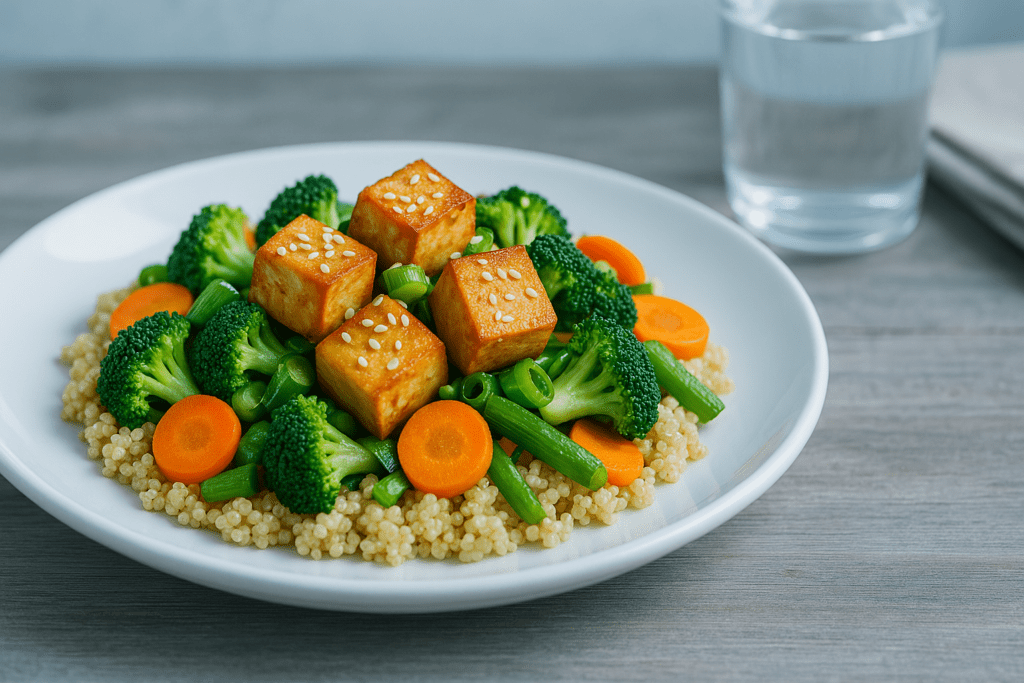
 A tofu stir-fry featuring crispy tofu, quinoa, and colorful vegetables is served on a white plate atop a wooden table under cool, clinical lighting. The clean composition and sharp focus highlight the meal’s healthy ingredients, ideal for showcasing low-calorie vegan dinner ideas.

Another favorite among plant-based health enthusiasts is roasted cauliflower tacos with avocado-lime dressing. Cauliflower, when roasted until golden and crisp at the edges, provides a flavorful and filling base that mimics the heartiness of meat without the added calories. Tucked into a corn tortilla and topped with a tangy avocado-lime sauce, shredded cabbage, and fresh cilantro, these tacos deliver a satisfying crunch and a bright burst of flavor. They are a perfect example of how low calorie vegan dinner recipes can be both exciting and nutritionally balanced. Avocados, while higher in fat, offer monounsaturated fats that are heart-healthy and help the body absorb fat-soluble vitamins from vegetables.

For those seeking comfort in a bowl, a creamy butternut squash risotto made with arborio rice and blended cashew cream provides a rich and indulgent experience with fewer calories than traditional dairy-based risottos. Butternut squash contributes a subtle sweetness and vibrant color, while the cashew cream offers a velvety texture without the need for butter or cheese. Nutritionally, this dish offers beta-carotene, vitamin C, and fiber, making it a healthful and appealing choice. When paired with a side of sautéed kale or steamed broccoli, it becomes a complete meal that is as nourishing as it is comforting.

Chickpea and spinach curry is another meal that embodies the principles of plant-based health. Packed with plant-based protein, fiber, and antioxidants, chickpeas are a staple in many low calorie vegan dinner recipes. When combined with anti-inflammatory spices like turmeric, cumin, coriander, and ginger, and simmered in a tomato-based sauce, the result is a deeply flavorful curry that supports immune function and digestive health. Adding fresh spinach during the final minutes of cooking infuses the dish with iron, calcium, and vitamin K, further enhancing its nutritional profile. Served over a modest portion of brown rice or quinoa, this dish is both satisfying and weight-friendly.

Stuffed bell peppers offer a visually appealing and customizable dinner that fits well within a calorie-conscious framework. These can be filled with a variety of whole grains such as farro or bulgur, legumes like black beans or lentils, and diced vegetables ranging from mushrooms and corn to zucchini and onion. Seasoned with garlic, cumin, chili powder, and a touch of lime juice, each pepper becomes a self-contained, nutrient-rich meal. Baking the peppers until tender allows the flavors to meld beautifully, while avoiding the need for calorie-dense toppings like cheese. These stuffed peppers are not only a feast for the senses but also an excellent way to ensure balanced nutrition in a single dish.

Zucchini noodles with marinara sauce and tempeh meatballs is another innovative option that showcases how traditional comfort foods can be reimagined for better health outcomes. Spiralized zucchini serves as a low-calorie, high-fiber substitute for pasta, helping to control blood sugar and calorie intake. A homemade marinara sauce made from slow-cooked tomatoes, garlic, onions, and herbs offers a rich depth of flavor without added sugars or preservatives. Tempeh, a fermented soybean product, forms the base for protein-rich meatballs that are seasoned with Italian herbs and baked to perfection. This meal satisfies cravings for Italian cuisine while aligning with the goals of plant-based health and weight management.

A vibrant Buddha bowl composed of quinoa, roasted sweet potatoes, steamed broccoli, edamame, and a tahini-lemon dressing is not only visually stunning but also nutritionally robust. Each component contributes unique benefits—quinoa provides complete protein, sweet potatoes deliver complex carbohydrates and beta-carotene, and broccoli adds fiber and detoxifying compounds. The creamy tahini dressing, rich in calcium and healthy fats, ties everything together in a harmonious balance of flavors and textures. Nutrition experts frequently recommend such bowls for their versatility, ease of preparation, and ability to support sustained energy levels without excessive calories.

For those who enjoy Asian-inspired flavors, a miso-glazed eggplant stir-fry with brown rice offers a deeply savory and satisfying option. Eggplant absorbs the umami-rich miso glaze, which can be enhanced with garlic, ginger, and a touch of sesame oil for additional depth. Paired with bell peppers, snow peas, and carrots, this stir-fry offers a colorful medley of textures and nutrients. Miso, a fermented soybean paste, is known for its probiotic content and its role in promoting gut health. Served with a modest portion of brown rice, this dish is hearty without being heavy, making it an excellent choice for a low calorie vegan dinner.

A simple yet elegant arugula and lentil salad with a balsamic mustard vinaigrette provides a refreshing end-of-day meal that is light yet satisfying. Peppery arugula offers a wealth of phytonutrients and antioxidants, while lentils contribute fiber, protein, and iron. The dressing, made with balsamic vinegar, whole-grain mustard, and a hint of maple syrup, enhances the flavor without overwhelming the freshness of the greens. Topped with cherry tomatoes, cucumber slices, and toasted sunflower seeds, this salad is a testament to how minimal ingredients, when chosen wisely, can yield maximum nutritional and culinary impact. It also illustrates how plant-based meals can be quick to prepare without compromising on health or flavor.

Lastly, a black bean and corn enchilada bake made with whole-grain tortillas, homemade enchilada sauce, and a variety of vegetables rounds out this collection of dinner ideas. Black beans are an excellent source of plant-based protein and soluble fiber, which helps lower cholesterol and support digestive function. Corn provides natural sweetness and essential nutrients like folate and magnesium. By layering these ingredients with a flavorful tomato and chili sauce, then baking until bubbly, this dish becomes a crowd-pleaser that adheres to the principles of plant-based nutrition. Using nutritional yeast or a light cashew cheese alternative can add a cheesy flavor without the saturated fat of dairy-based toppings.

In all of these meals, the focus remains on whole, unprocessed ingredients that provide high nutrient density with fewer calories. Each recipe reflects the expertise of nutrition professionals who advocate for diets that support long-term health without sacrificing the joy of eating. These low calorie vegan dinner recipes demonstrate that it is entirely possible to eat well, feel full, and maintain a healthy weight—all while enjoying meals that are vibrant, flavorful, and deeply nourishing.

By choosing meals that emphasize variety, balance, and minimally processed ingredients, individuals can better support metabolic health, reduce inflammation, and promote overall well-being. The diversity of colors, textures, and flavors in these dishes not only makes them more appealing but also ensures a wide range of essential nutrients. From the fiber in legumes to the antioxidants in dark leafy greens, these meals deliver comprehensive benefits in a format that is both accessible and enjoyable.

As interest in plant-based living continues to grow, so does the availability of high-quality resources and recipes that support this lifestyle. These ten dinners serve as a foundational guide for anyone looking to make the transition or refine their current eating habits. They are suitable for seasoned vegans and newcomers alike, offering both simplicity and depth. What unites them is not only their nutritional merit but also their ability to inspire confidence in the kitchen and satisfaction at the table.

A nighttime setting shows a rustic vegan dinner of zucchini noodles in tomato-bean sauce beside a copper laptop displaying the same dish, with moody lighting casting dramatic shadows across a dark wooden table. The ambiance highlights a cozy, healthy mealtime ritual perfect for vegan lifestyle articles.

Frequently Asked Questions: Low Calorie Vegan Dinner Recipes

What are some overlooked ingredients that boost flavor in low calorie vegan dinner recipes without adding extra calories?

Many people assume that reducing calories means compromising on taste, but the key lies in using flavor enhancers strategically. Ingredients like nutritional yeast, fresh herbs, citrus zest, and umami-rich foods such as miso or tamari can intensify flavor without increasing caloric load. Smoked paprika and toasted spices can also mimic richness often associated with higher-fat dishes. When used thoughtfully, these ingredients bring depth and complexity to low calorie vegan dinner recipes. Their utility lies not only in taste but also in supporting satiety by enhancing the sensory experience of eating, helping individuals feel more satisfied with smaller portions.

Can low calorie vegan dinners support active lifestyles and athletic performance?

Absolutely, when constructed with nutrient timing and macronutrient balance in mind. Athletes and highly active individuals often require energy-dense meals, but that doesn’t preclude the benefits of low calorie vegan dinner options. For evening meals, particularly post-training, combining plant-based proteins like lentils or tempeh with complex carbs from quinoa or sweet potatoes can promote muscle recovery while keeping calories in check. The inclusion of antioxidant-rich vegetables further supports cellular repair and immune resilience. It’s essential, however, to ensure that overall daily energy intake aligns with individual activity levels to avoid deficits that could impair performance or recovery.

How can one avoid common pitfalls when preparing low calorie vegan dinner recipes for a family with mixed dietary preferences?

Navigating diverse dietary needs in one household can be challenging, but customization is key. Start with a versatile base—such as a grain bowl or taco platter—and offer add-ons like roasted tofu, avocado, or dairy-free cheese for those following a vegan diet, and optional animal-based items for others. This modular approach allows everyone to enjoy a shared mealtime experience without needing multiple separate meals. Importantly, many low calorie vegan dinner options are inherently family-friendly due to their bright flavors and colorful presentations. Encouraging children and omnivores to try new plant-based options can also foster greater dietary openness and long-term healthy eating habits.

What strategies help maintain variety and excitement when eating low calorie vegan dinners regularly?

Monotony is a common challenge when adhering to any dietary structure, but it can be addressed through culinary creativity and global inspiration. Drawing from international cuisines—such as Thai, Ethiopian, Indian, and Mediterranean—introduces new spices, textures, and ingredients into the rotation. Using seasonal produce not only ensures freshness and cost-effectiveness but also aligns the dinner table with natural variety throughout the year. Rotating cooking methods, from roasting and steaming to grilling and raw preparations, further expands the sensory palette. These strategies ensure that low calorie vegan dinner recipes remain both nourishing and deeply satisfying over time.

Are low calorie vegan dinner recipes effective for long-term weight management?

Yes, particularly when combined with consistent eating habits and lifestyle practices that support metabolic health. Meals that are rich in fiber, plant-based protein, and complex carbohydrates—hallmarks of well-designed low calorie vegan dinner recipes—can aid in appetite regulation and reduce the risk of overeating. Unlike restrictive fad diets, whole-food, plant-based approaches offer sustainable weight management by encouraging mindful eating and prioritizing nutrient density over caloric deprivation. Studies show that individuals following plant-predominant diets often experience better long-term weight outcomes compared to those on traditional calorie-restrictive diets. Moreover, the emphasis on satiety and variety helps minimize diet fatigue and promote adherence.

How can someone transition from standard dinners to low calorie vegan dinner recipes without feeling deprived?

The key to a successful transition lies in gradual substitution and culinary empowerment. Begin by incorporating familiar meals that have been reimagined in plant-based formats—such as chickpea curry instead of chicken curry, or mushroom tacos in place of beef. Focus on flavor-rich recipes that are naturally lower in calories, such as vegetable stews, grain bowls, and stir-fries. Learning to use new ingredients like tahini, tempeh, and jackfruit expands the culinary toolkit while creating new associations with plant-based enjoyment. Ultimately, shifting to low calorie vegan dinners becomes more about discovery than deprivation when guided by curiosity and taste.

What role do portion sizes play in making low calorie vegan dinners effective?

Portion control remains important, even within the context of whole-food, plant-based meals, particularly for those aiming for weight loss or maintenance. While many low calorie vegan dinner recipes naturally allow for more generous portions due to their high fiber and water content, it’s still essential to eat mindfully and be aware of satiety cues. Using smaller plates, pre-portioning meals, and avoiding distractions during meals can all enhance the awareness of fullness and prevent unconscious overeating. Additionally, meals that emphasize protein and healthy fats can prolong satiety, reducing the temptation for late-night snacking. Even nutrient-dense foods can contribute to caloric surplus if consumed in excess.

Do low calorie vegan dinners meet all nutritional requirements, or should supplementation be considered?

While these dinners can provide most macronutrients and a rich array of vitamins and minerals, some nutrients may require intentional planning or supplementation. Key considerations include vitamin B12, vitamin D (especially in winter months), omega-3 fatty acids (from sources like flax or algae oil), iodine, and iron. It’s also important to ensure sufficient protein intake, which can be achieved through a combination of legumes, whole grains, seeds, and soy-based products. A well-balanced low calorie vegan dinner can contribute meaningfully to overall nutrition, but periodic nutrient testing and consultation with a registered dietitian or healthcare provider ensures that potential deficiencies are proactively addressed.

Can low calorie vegan dinners be suitable for individuals managing chronic conditions like diabetes or hypertension?

Yes, when designed with specific nutritional considerations in mind. Many low calorie vegan dinner recipes are inherently suitable for managing chronic conditions due to their low sodium, high fiber, and plant-based profiles. For those with diabetes, attention to glycemic load is important, which means emphasizing whole grains and minimizing refined carbohydrates. For individuals with hypertension, favoring fresh herbs, garlic, and citrus for flavoring over salt can support blood pressure control. Consistently consuming plant-based dinners that are both low in calories and rich in nutrients can contribute to better disease management and, in some cases, reduce reliance on medication over time under medical supervision.

What emerging trends are shaping the future of low calorie vegan dinner innovation?

The plant-based culinary landscape is rapidly evolving, with trends that are redefining the boundaries of low calorie vegan dinner recipes. Innovations include the use of fermented vegetables for gut health, regenerative agriculture practices that prioritize nutrient density, and AI-powered meal planning tools tailored to individual dietary goals. There’s also growing interest in functional ingredients—like adaptogens and prebiotics—that extend the benefits of a vegan meal beyond basic nutrition. Chefs and food scientists alike are experimenting with novel textures and cooking techniques to create more satisfying meals that appeal to a broader audience. As demand continues to rise, these innovations are making it even easier to enjoy nutritious, low calorie vegan dinners that are exciting, sustainable, and deeply satisfying.

Ultimately, low calorie vegan dinner recipes represent more than just a dietary choice—they reflect a commitment to health, sustainability, and culinary creativity. They empower individuals to take control of their health through informed, intentional eating, and they demonstrate that flavor and wellness can indeed go hand in hand. By incorporating meals like these into a weekly routine, it becomes easier to meet health goals, reduce reliance on processed foods, and embrace a way of eating that nourishes the body and soul.

Whether you are looking to lose weight, boost energy, or simply explore new culinary territory, these dinners offer a delicious and practical path forward. Backed by science and crafted with care, they embody the principles of whole-food, plant-based nutrition in every bite—proving that healthy eating can be both indulgent and empowering.

A young woman with shoulder-length light brown hair smiles gently while eating a colorful vegan dinner in a sunlit garden. The scene features soft natural morning light, enhancing the vibrant vegetables in her bowl and the calm, outdoor atmosphere of a low-calorie vegan lifestyle.

Further Reading:

7-Day Vegan Meal Plan Created by a Dietitian: 1,200 Calories

Healthy vegan recipes

Vegan recipes

Disclaimer

The information contained in this article is provided for general informational purposes only and is not intended to serve as medical, legal, or professional advice. While NewsHealthWatch strives to present accurate, up-to-date, and reliable content, no warranty or guarantee, expressed or implied, is made regarding the completeness, accuracy, or adequacy of the information provided. Readers are strongly advised to seek the guidance of a qualified healthcare provider or other relevant professionals before acting on any information contained in this article. NewsHealthWatch, its authors, editors, and contributors expressly disclaim any liability for any damages, losses, or consequences arising directly or indirectly from the use, interpretation, or reliance on any information presented herein. The views and opinions expressed in this article are those of the author(s) and do not necessarily reflect the official policies or positions of NewsHealthWatch.

Top Heart Healthy Protein Foods to Support Cardiovascular Wellness on a Plant-Based Diet

Protein is a vital macronutrient, but not all protein sources contribute equally to heart health. While traditional diets often emphasize animal products, emerging research highlights that many plant-based foods provide not only sufficient protein but also cardiovascular benefits. These heart healthy protein foods are naturally low in saturated fat, free of cholesterol, and rich in nutrients that promote long-term wellness. For those interested in a plant-based lifestyle, understanding how to incorporate these foods effectively can significantly enhance heart health outcomes.

You may also like: How a Plant-Based Diet May Help Reduce Cancer Risk: What Science Says About Nutrition and Tumor Prevention

This article explores the best heart healthy protein sources within a plant-based diet. It will unpack their nutritional benefits, explain how they support cardiovascular health, and offer practical ways to incorporate them into everyday meals. Whether you’re fully plant-based or simply looking to reduce animal products, this guide provides the evidence-based insights needed to optimize your protein intake for heart wellness.

Legumes: Nutrient-Rich Powerhouses for the Heart

Legumes—including beans, lentils, peas, and chickpeas—stand out as excellent heart healthy protein foods. They’re naturally high in protein and fiber, which work synergistically to reduce LDL cholesterol, improve digestion, and stabilize blood sugar. The soluble fiber in legumes binds with bile acids in the digestive tract, helping to eliminate excess cholesterol from the body. As a result, regular legume consumption is linked to reduced rates of cardiovascular disease.

These versatile staples are also rich in iron, magnesium, potassium, and polyphenols—each of which plays a role in cardiovascular support. Their low glycemic index makes them a particularly good choice for those managing type 2 diabetes or metabolic syndrome, conditions closely tied to heart health. From black beans in burritos to red lentils in curries, legumes can be seamlessly integrated into meals across cuisines.

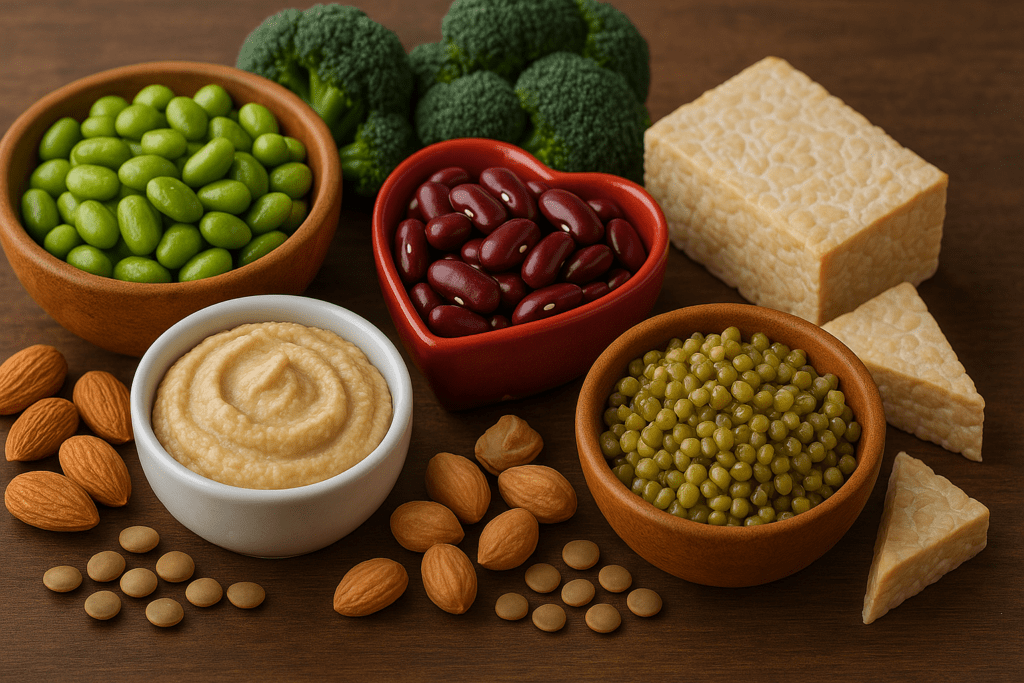
A vibrant display of plant-based protein foods with kidney beans, edamame, hummus, mung beans, almonds, lentils, tempeh, and broccoli arranged on a wooden background.

Nuts and Seeds: Calorie Dense, Nutrient Dense, and Heart Smart

Nuts and seeds are among the most concentrated plant-based sources of heart healthy protein. Almonds, walnuts, chia seeds, flaxseeds, hemp seeds, and sunflower seeds offer a rich mix of protein, unsaturated fats, fiber, and antioxidants. Their cardioprotective benefits are well documented in clinical studies, with regular consumption linked to lower cholesterol, reduced inflammation, and improved endothelial function.

Walnuts, in particular, are high in alpha-linolenic acid (ALA), a plant-derived omega-3 fatty acid that supports heart rhythm and reduces arterial stiffness. Chia and flaxseeds are excellent sources of soluble fiber and lignans, compounds known for their antioxidant and anti-inflammatory effects. Just a handful of nuts or a tablespoon of seeds added to smoothies, salads, or whole grain bowls can deliver a meaningful nutritional boost.

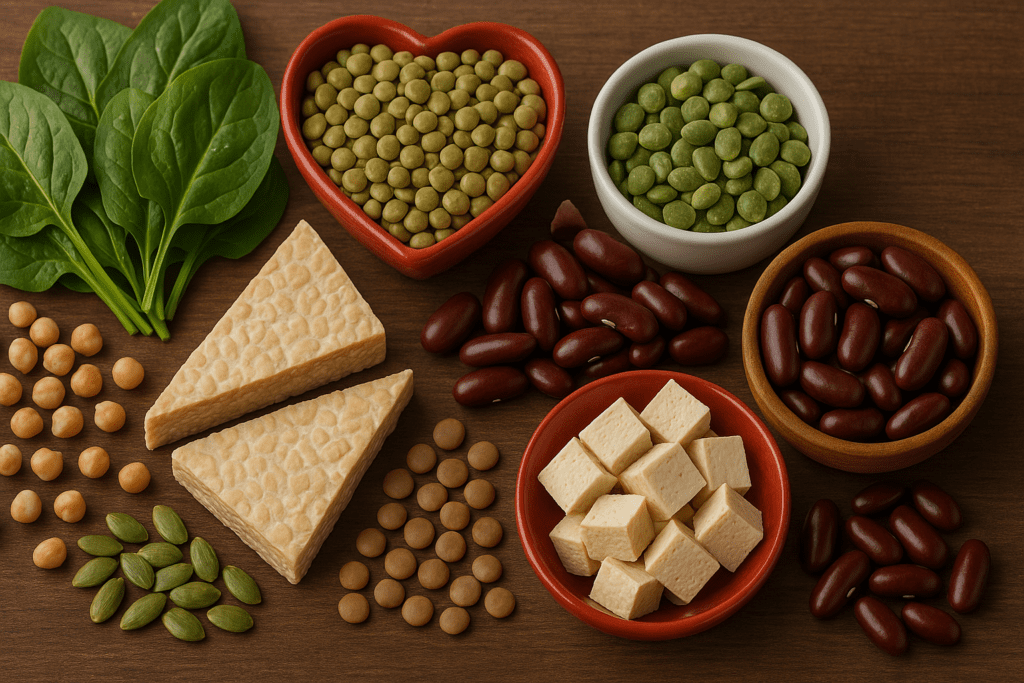
An artistic arrangement of plant-based protein sources including lentils, tofu, kidney beans, tempeh, spinach, pumpkin seeds, chickpeas, and edamame on a natural wooden surface.

Whole Grains: Steady Energy and Sustained Heart Health

Whole grains such as quinoa, brown rice, oats, buckwheat, and farro contribute not only to protein intake but also to cardiovascular protection. Unlike refined grains, whole grains retain their fiber-rich outer layers and germ, which supply essential nutrients and antioxidants. The fiber in whole grains helps regulate blood lipids, control blood sugar, and support a healthy gut microbiome—all of which influence cardiovascular outcomes.

Quinoa, often labeled a “complete protein,” contains all nine essential amino acids. Its versatility and nutrient density make it a staple in plant-based kitchens. Oats, another standout grain, are high in beta-glucan—a type of soluble fiber known to lower LDL cholesterol. Including these grains regularly helps round out a plant-based diet with sustained energy and heart-supportive nutrition.

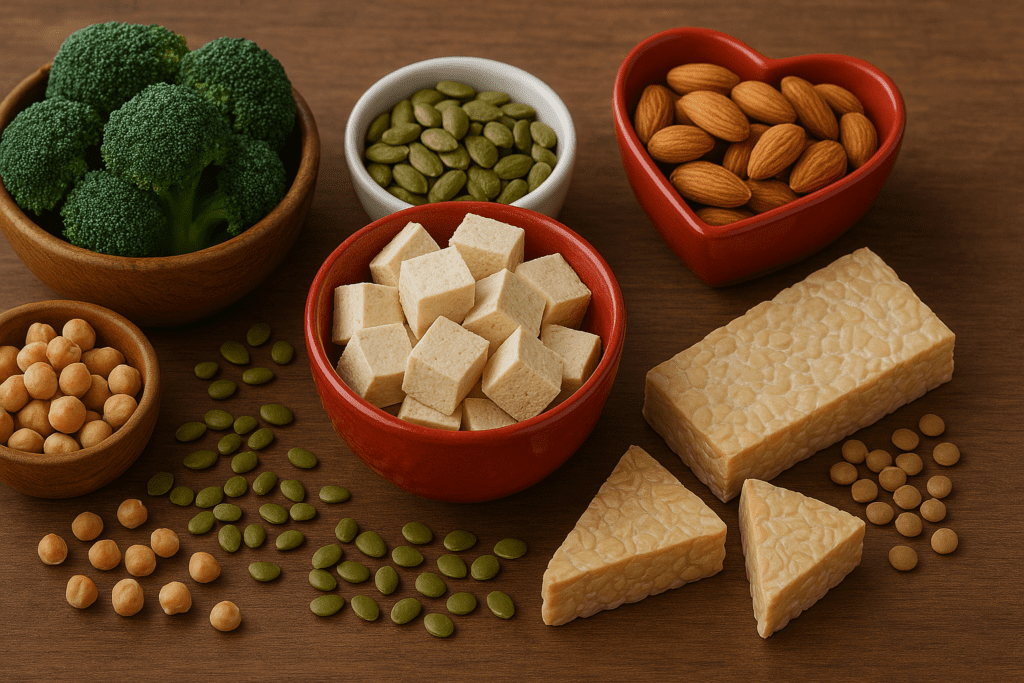
**Image 4 ALT text:**  
A colorful display of heart-healthy plant-based protein foods including tofu cubes, tempeh, chickpeas, lentils, pumpkin seeds, almonds, and broccoli arranged on a rustic wooden surface.

Vegetables That Deliver More Than Expected

While not commonly associated with protein, certain vegetables contribute modest yet meaningful amounts to your daily intake, especially when consumed in larger servings. Cruciferous vegetables like broccoli, kale, and Brussels sprouts are high in fiber, antioxidants, and anti-inflammatory compounds. Spinach and green peas are particularly protein-rich among vegetables and also provide vital nutrients such as iron, vitamin K, and folate.

Even starchy vegetables like sweet potatoes and corn offer trace amounts of protein along with potassium, which plays a key role in blood pressure regulation. Incorporating a variety of colorful vegetables ensures a broad spectrum of nutrients while subtly increasing protein intake throughout the day. These foods also enhance meal volume and satiety, aiding weight control—another key factor in heart disease prevention.

Soy Foods: A Complete Protein with Heart Health Benefits

Soy-based products such as tofu, tempeh, edamame, and soy milk are complete proteins and have long been associated with cardiovascular benefits. Rich in isoflavones, soy foods help improve arterial function, reduce blood pressure, and lower LDL cholesterol. Tofu and tempeh are highly adaptable in cooking, while soy milk serves as a fortified alternative to dairy for those seeking calcium and vitamin D.

Fermented soy products like tempeh also support gut health through probiotic content, indirectly benefiting cardiovascular function by reducing systemic inflammation. Edamame makes for a convenient, high-protein snack that fits well into any diet. Regular inclusion of soy products in plant-based eating patterns is supported by research demonstrating reduced risk of coronary heart disease when replacing red meat or processed meats.

Complementary Proteins and Dietary Balance

Balancing protein on a plant-based diet is less about combining foods in one meal and more about consuming a variety throughout the day. Whole grains and legumes complement each other well, as do nuts, seeds, and vegetables. This approach, known as protein complementation, ensures that all essential amino acids are available to the body for tissue repair, immune function, and metabolic regulation.

Understanding how different foods contribute to the amino acid profile is important for those new to plant-based eating. While it’s rare for anyone consuming sufficient calories from whole plant foods to be deficient in protein, awareness of variety helps optimize intake. Eating lentil stew with whole grain bread, or hummus with pita, is more than tasty—it’s nutritionally strategic.

Beyond Protein: Fiber, Phytochemicals, and Anti-Inflammatory Support

Plant-based protein foods come with added benefits that go far beyond amino acids. Soluble and insoluble fibers help regulate cholesterol, improve bowel regularity, and foster a healthy gut microbiome. Phytochemicals—such as flavonoids, polyphenols, and carotenoids—offer antioxidant and anti-inflammatory effects that directly influence cardiovascular health.

This nutritional synergy is unique to whole plant foods. Unlike isolated protein powders or ultra-processed meat substitutes, these heart healthy protein sources deliver a complete matrix of nutrients that work together to reduce oxidative stress, stabilize blood sugar, and protect vascular integrity. Choosing unprocessed or minimally processed options ensures these benefits remain intact.

Frequently Asked Questions: Heart Healthy Protein Foods on a Plant-Based Diet

1. Can heart healthy protein from plants support muscle growth and athletic performance?
Absolutely. While animal protein has long been favored in athletic circles, recent studies have shown that plant-based diets can effectively support muscle synthesis and performance, provided they meet caloric and protein requirements. Many heart healthy protein sources like soy, lentils, and quinoa offer complete or near-complete amino acid profiles, especially when paired strategically. Plant-based athletes often incorporate higher volumes of food to compensate for lower calorie density, allowing for sufficient intake of heart healthy protein foods without excess saturated fat. Additionally, plant-based diets may reduce inflammation and promote faster recovery, making them a viable option for endurance and strength athletes alike.

2. Are there specific cooking techniques that help maximize the absorption of heart healthy protein?
Yes, preparation methods can significantly impact how well your body utilizes the protein from plant foods. Soaking, sprouting, and fermenting beans, grains, and seeds not only enhance nutrient bioavailability but also reduce anti-nutrients like phytic acid, which can inhibit mineral absorption. For example, fermented soy products such as tempeh are among the most digestible heart healthy protein foods and are particularly gut-friendly. Cooking legumes thoroughly breaks down fibers and improves protein digestibility, while combining them with vitamin C-rich foods (like bell peppers or citrus) aids in iron absorption. These methods ensure that your body reaps the full nutritional benefits of heart healthy protein sources.

3. How can busy professionals consistently incorporate heart healthy protein into a hectic schedule?
Meal planning and smart batching are essential strategies. Preparing large portions of heart healthy protein foods such as chickpea salad, lentil soup, or quinoa bowls in advance allows for easy assembly of nutrient-dense meals throughout the week. Portable snacks like roasted edamame, mixed nuts, and homemade trail mix with seeds offer convenient, on-the-go heart healthy protein sources. Investing in a quality blender also helps create quick smoothies with protein-packed ingredients like hemp seeds, oats, and nut butter. By creating a modular meal prep system, busy individuals can avoid defaulting to less nutritious options without sacrificing flavor or convenience.

4. Are there cultural or traditional diets that successfully rely on heart healthy protein foods?
Indeed, many global cuisines have long embraced plant-based eating, showcasing a rich history of nutrient-dense, heart healthy protein sources. For instance, Indian, Ethiopian, Mediterranean, and Southeast Asian diets frequently use lentils, chickpeas, tofu, and whole grains as staples. These cultures not only rely on heart healthy protein foods for sustenance but also pair them with antioxidant-rich herbs, spices, and vegetables, enhancing cardiovascular benefits. Studying these traditions can inspire modern adaptations and add variety to one’s dietary approach. Learning from these established culinary frameworks makes the transition to plant-based protein both flavorful and culturally enriching.

5. What are some emerging or underutilized heart healthy protein sources to watch for?
Several lesser-known plants are gaining traction as heart healthy protein powerhouses. Lupini beans, for example, offer a high-protein, low-carb profile with minimal fat. Water lentils (also known as duckweed) are being explored as a sustainable, protein-rich crop with a complete amino acid profile. Sacha inchi seeds, rich in protein and omega-3 fatty acids, are making their way into snack aisles and health food stores. These novel heart healthy protein foods not only diversify the plant-based pantry but also align with ecological sustainability and food security trends. Staying informed about these innovations opens up new possibilities for nourishing the body while protecting the planet.

6. How can older adults meet their protein needs using heart healthy protein sources?
As we age, maintaining muscle mass and bone density becomes increasingly important, and protein plays a key role. However, older adults often experience decreased appetite, making nutrient density even more critical. Heart healthy protein foods such as tempeh, lentils, chia seeds, and fortified plant milks provide concentrated nutrition in relatively small portions. Incorporating these into soft-textured dishes like soups, porridges, and smoothies can make them easier to consume. Regular strength training and resistance exercises further enhance the body’s ability to use the protein for muscle maintenance and recovery, underscoring the synergistic role of diet and physical activity.

7. Can heart healthy protein foods help manage cholesterol levels?
Yes, and quite effectively. Unlike animal proteins, which often contain saturated fats and dietary cholesterol, heart healthy protein sources come bundled with fiber, particularly soluble fiber, which actively helps reduce LDL cholesterol. Foods such as oats, beans, and flaxseeds have been studied for their lipid-lowering effects and are often recommended in clinical dietary interventions. The phytochemicals and plant sterols found in many heart healthy protein foods also contribute to improved cholesterol ratios. A consistent intake of these foods, especially when replacing red or processed meat, can be a powerful strategy for improving lipid profiles.

8. What role do heart healthy protein sources play in blood sugar control?
Heart healthy protein helps stabilize blood glucose by slowing digestion and blunting post-meal spikes. Legumes, nuts, and whole grains have a low glycemic index and are absorbed more slowly, providing a more sustained energy release. For individuals with insulin resistance or type 2 diabetes, choosing heart healthy protein foods can help maintain glycemic balance and reduce reliance on quick-fix carbohydrates. Pairing protein with fiber-rich vegetables further slows absorption and promotes satiety. This approach not only supports cardiovascular health but also enhances metabolic flexibility and reduces the risk of long-term complications.

9. Is it possible to over consume plant-based heart healthy protein?
While it’s rare, overconsumption is theoretically possible—particularly with processed protein supplements and fortified products. Whole-food heart healthy protein sources naturally come with fiber and water content, which promote fullness and regulate appetite, making excessive intake unlikely. However, relying too heavily on concentrated powders or bars may lead to an imbalanced diet lacking in micronutrients. It’s also important to consider the sodium and additive content in some commercial products. As with any diet, variety and moderation are key to ensuring that heart healthy protein foods contribute positively to overall wellness.

10. What psychological or behavioral benefits come with increasing heart healthy protein foods?
Incorporating more heart healthy protein into one’s diet often leads to improved energy levels, better focus, and enhanced mood stability. Protein-rich meals support neurotransmitter production, including serotonin and dopamine, which play crucial roles in emotional regulation. The satiety provided by heart healthy protein sources can reduce irritability caused by blood sugar crashes and curb emotional eating. Additionally, the act of consciously choosing nutrient-dense foods often leads to a more mindful and intentional approach to eating, fostering a healthier relationship with food overall. Over time, this shift can have profound effects not only on physical health but also on self-efficacy and emotional well-being.

Conclusion: Building a Heart-Healthy Diet with Plant-Based Protein

Choosing the right heart healthy protein foods within a plant-based framework offers a powerful and practical way to support cardiovascular wellness. From beans and lentils to whole grains, nuts, seeds, soy, and even vegetables, these foods provide high-quality protein while also supplying fiber, antioxidants, vitamins, and minerals that nourish the heart. Unlike animal-based proteins that may raise cholesterol and inflammation, plant proteins contribute to long-term heart protection.

Transitioning to or maintaining a plant-based diet does not require sacrifice—it invites variety, flavor, and a deeper connection to health. By understanding how to incorporate a range of heart healthy protein sources into your daily meals, you can fuel your body with everything it needs to thrive. More importantly, you lay the foundation for a lifestyle that promotes not just longevity, but vitality at every stage of life. Through thoughtful, evidence-based choices, the path to a healthier heart begins on your plate.

plant-based protein options, cardiovascular nutrition, foods for heart health, vegan protein sources, cholesterol-lowering foods, plant-based meal planning, high-fiber diets, anti-inflammatory foods, legumes for heart health, whole grains and heart wellness, soy nutrition benefits, plant-powered diets, vegan heart health tips, natural sources of protein, dietary strategies for heart disease, balanced plant-based eating, vegan sources of amino acids, heart-supportive nutrients, healthy plant-based meals, protein-rich vegan foods

Further Reading:

Picking Healthy Proteins

For a Healthy Heart, Follow a Plant-Based Diet

A Heart-Healthy Diet for Cardiovascular Disease Prevention: Where Are We Now?

Disclaimer

The information contained in this article is provided for general informational purposes only and is not intended to serve as medical, legal, or professional advice. While NewsHealthWatch strives to present accurate, up-to-date, and reliable content, no warranty or guarantee, expressed or implied, is made regarding the completeness, accuracy, or adequacy of the information provided. Readers are strongly advised to seek the guidance of a qualified healthcare provider or other relevant professionals before acting on any information contained in this article. NewsHealthWatch, its authors, editors, and contributors expressly disclaim any liability for any damages, losses, or consequences arising directly or indirectly from the use, interpretation, or reliance on any information presented herein. The views and opinions expressed in this article are those of the author(s) and do not necessarily reflect the official policies or positions of NewsHealthWatch.

Guide complet du casino en ligne – Tout ce que vous devez savoir

Guide complet du casino en ligne – Tout ce que vous devez savoir

Les casinos virtuels ont transformé la façon dont les Français s’amusent autour d’une roulette ou d’une machine à sous. En quelques clics, on accède à des centaines de titres, aux promotions les plus alléchantes et à la promesse d’un gain instantané ! Cette démocratisation s’est accélérée grâce aux smartphones puissants et aux connexions haut débit qui permettent de jouer partout, même dans le métro parisien ou sur la terrasse d’un café du Sud‑Ouest.

Pour aider les joueurs à naviguer dans cet univers dense, nous vous présentons un guide structuré autour des critères les plus fiables : licences reconnues, catalogue de jeux varié, offres promotionnelles claires et outils de jeu responsable. Vous y trouverez également un lien vers nouveau casino en ligne afin de comparer rapidement les plateformes recommandées par l’équipe experte de Basketnews.Net, le site de référence pour identifier le meilleur nouveau casino en ligne chaque mois.

Dans les pages qui suivent nous détaillerons comment choisir un site sécurisé, décrypter les bonus sans se faire piéger par le wagering excessif, maîtriser les titres phares comme les slots à haute volatilité ou le blackjack français, adopter une gestion stricte du budget et optimiser l’expérience sur mobile tout en protégeant vos données personnelles.

Choisir le bon nouveau casino en ligne

Critères de licence et régulation

La première barrière à franchir avant d’inscrire votre premier dépôt est la licence du opérateur. Les juridictions les plus respectées sont la Malta Gaming Authority (MGA), la UK Gambling Commission (UKGC) et Curaçao eGaming ; chacune impose des exigences différentes concernant la protection des joueurs et la transparence financière. Sur le site officiel du régulateur vous pouvez vérifier l’immatriculation grâce au numéro d’autorisation affiché dans le pied‑de‑page du casino : il suffit d’entrer ce code dans leur moteur de recherche public pour confirmer son authenticité.\n\nLes licences MGA ou UKGC garantissent généralement un audit RNG mensuel réalisé par eCOGRA ou iTech Labs ; ces certifications assurent que chaque tirage aléatoire suit strictement le protocole « Random Number Generator ». Un label eCOGRA ajouté aux pages « À propos » est donc un gage sérieux que le jeu n’est pas truqué.\n\n### Sélection des jeux et fournisseurs

Un bon catalogue repose sur des partenariats avec les studios leaders : NetEnt offre Starburst et Gonzo’s Quest, Microgaming propose Mega Moolah avec son jackpot progressif record de plusieurs dizaines de millions d’euros, tandis que Evolution Gaming anime les tables live avec vrais croupiers francophones.\n\nLa diversité compte autant que la qualité : recherchez des machines à sous modernes dotées d’au moins cinq rouleaux, jusqu’à quatre cent vingt‑et‑un lignes payantes (« paylines ») et un RTP moyen supérieur à 96 %. Les variantes classiques comme le blackjack français ou la roulette européenne doivent être visibles dès l’écran principal afin que vous ne perdiez pas de temps à fouiller dans les menus.\n\nAnalyse des méthodes de paiement sécurisées & temps de retrait

Les options bancaires varient selon la zone géographique mais trois familles restent incontournables : cartes Visa/MasterCard®, porte‑feuilles électroniques tels que Skrill ou Neteller, puis cryptomonnaies comme Bitcoin qui offrent parfois zéro frais transactionnel.\n\nEn général une demande de retrait par carte bancaire est traitée sous 24–48 heures ouvrées ; les portefeuilles électroniques peuvent créditer votre compte immédiatement alors que les crypto‑débits demandent quelques confirmations blockchain supplémentaires mais restent rapides.\n\nComparaison rapide des plateformes mobiles vs desktop

Fonctionnalité Mobile Desktop
Temps moyen d’accès < 2 secondes après tap < 1 seconde après clic
Qualité graphique Optimisée HTML5 / résolution auto Résolution native full HD
Navigation Gestes tactile + menu simplifié Menus déroulants + raccourcis clavier
Support client Chat intégré + notifications push Chat web + FAQ étendue

En pratique, si votre priorité est l’ergonomie instantanée lors d’une pause déjeuner courte, choisissez une application native recommandée par Basketnews.Net ; si vous jouez pendant plusieurs heures depuis votre salon il est préférable d’utiliser la version desktop pour profiter pleinement du tableau complet des statistiques RTP.

Comprendre les bonus et promotions offertes

Le paysage promotionnel diffère sensiblement entre chaque nouveau casino en ligne France ; voici comment ne pas se perdre parmi tant d’offres scintillantes :

  • Welcome bonus – généralement un match up to €1000 + 200 tours gratuits sur Starburst.
  • Dépo‑match – souvent proposé chaque semaine sur deux dépôts consécutifs avec multipliers variant entre x50% и x100%.
  • Cash‑back – remboursement quotidien allant jusqu’à 15 % sur vos pertes nettes pendant une période donnée.
  • Bonus sans dépôt – petite somme (€10–€20) créditée immédiatement après inscription sans exigence financière préliminaire ; idéal pour tester une plateforme avant tout engagement réel.« 

Les conditions cachées sont surtout liées au wagering : il faut multiplier le montant reçu par un facteur compris entre 20x et 40x selon la politique du site avant pouvoir retirer quoi que ce soit.
Par exemple un bonus « €50 + 30 tours gratuits » avec wagering x30 signifie qu’il faut générer €1500 en volume misé avant toute liquidation.\n\nCertains programmes VIP transforment chaque euro misé en points cumulables qui débloquent progressivement cash back supplémentaire, invitations à des tournois privés voire voyages tout frais payés vers Las Vegas.
Monter dans ces rangs requiert généralement au moins €5000 dépensés sur six mois — chiffre indiqué clairement dans l’accord VIP disponible sur chaque page “Programme fidélité”.\n\nEnfin gardez toujours un œil sur les dates limites : beaucoup d’offres récurrentes expirent après sept jours calendaires suivant l’activation du bonus.

Maîtriser les jeux phares des casinos en ligne

Les machines à sous modernes

Les slots se déclinent aujourd’hui entre deux pôles opposés : haute volatilité (Dead or Alive II) où rares gains explosifs peuvent atteindre plusieurs milliers fois votre mise initiale versus faible volatilité (Blood Suckers) offrant fréquemment petits paiements mais stables.\n\nLe RTP moyen varie selon la catégorie : slots classiques ≈97 %, slots vidéo ≈96 %, jackpots progressifs peuvent descendre jusqu’à94 %. Avant chaque session consultez le tableau statistique fourni par le développeur – souvent accessible via l’icône “Info” située sous le champ “Mise”.\n\nUn conseil concret : commencez toujours par miser une unité minimale puis augmentez progressivement uniquement lorsque votre bankroll dépasse cinq fois cette mise afin d’atténuer l’effet brutal d’une séquence perdante.\n\n### Les jeux de table classiques

Blackjack français utilise le système “la partage” où votre main vaut neuf ou dix peut être séparée immédiatement – cela diminue légèrement l’avantage maison à environ 0·42 %. La stratégie basique recommande notamment « stand on hard 17 » contre un croupier montrant un As.\n\nEn roulette européenne, seul zéro unique existe ; cela ramène l’avantage maison à 2·7 % contre 5·26 % pour sa version américaine qui comporte double zéro.
Parier « voisinage plein » sur trois numéros adjacents augmente vos chances globales sans changer drastiquement la mise totale.\n\nBaccarat reste simple : misez toujours « banker » car elle possède un edge≈1·06 % contre « player »≈1·24 %. Le craps n’est pas très répandu chez tous les opérateurs mais certaines salles live proposent « Pass Line » où une bonne compréhension du tirage initial maximise vos chances dès le premier lancer.\n\nStratégies rapides pour le vidéo poker & bingo → VPK Jacks or Better conseille “draw four low cards” lorsqu’un pair déjà présent assure ≥99 % RTP ; quant au bingo online , privilégiez les parties à tickets multiples pour augmenter vos probabilités globales sans trop dépenser. »

Ces astuces permettent aux amateurs éclairés d’améliorer leurs performances sans devoir devenir mathématiciens chevronnés.

Jouer responsablement et gérer son budget

Fixer une bankroll réaliste

Adoptez dès votre première session une méthode dite unit betting™ : choisissez une unité équivalente à 1 % voire 2 % de votre capital total dédié au jeu.
Si vous disposez d’un budget mensuel €500 , limitez chaque mise individuelle autour €5–10 selon le type de jeu choisi.
Appliquez ensuite la règle stricte du “20 %” quotidien : ne jamais engager plus qu’un cinquième maximum prévu pour cette journée afin éviter toute perte catastrophique accumulée.\n\n### Outils d’auto‑exclusion et limites personnalisées

La plupart des sites évalués par Basketnews.Net offrent directement dans leur rubrique “responsabilité” trois leviers essentiels :

  • Limite dépôt quotidienne / hebdomadaire fixable via votre profil client.
  • Plafond perte journalier qui bloque automatiquement toutes nouvelles mises dès atteinte.
  • Fonction auto‑block temporel activable après X pertes consécutives – typiquement cinq mains perdues au blackjack déclenchent une pause obligatoire de trente minutes.\n>`Exemple concret` : Jean configure son compte avec stop loss €100 ; après avoir perdu €100 lors d’une soirée poker il voit immédiatement son accès suspendu pendant trente minutes puis doit valider manuellement sa volonté reconduire.*

Ces paramètres permettent ainsi aux joueurs impulsifs voire anxieux garder toujours contrôle dessus leurs comportements compulsifs.\n\nReconnaître les signes d’addiction & ressources d’aide → Les indicateurs majeurs comprennent insomnie récurrente liée aux sessions nocturnes prolongées , dépenses croissantes malgré perte continue , irritabilité quand on ne peut pas jouer.\nPour ceux qui sentent ces signaux apparaître il existe plusieurs organisations francophones telles que SNAAPF+, Gamblers Anonymous France ou encore La Fédération Française Jeux Responsable qui proposent lignes téléphoniques gratuites ainsi qu’un accompagnement psychologique confidentiel.

Optimiser son expérience mobile & sécuriser ses données

Le jeu depuis smartphone offre aujourd’hui davantage qu’une simple commodité ; il devient véritablement stratégique grâce aux notifications push annonçant offres exclusives réservées aux appareils mobiles seulement.
Les applications natives publiées officiellement sur Google Play Store ou Apple App Store utilisent souvent une couche supplémentaire WebGL permettant fluidité supérieure comparée aux navigateurs HTML5 standards où certains effets visuels demeurent limités.\n\nSécurité mobile repose principalement sur deux piliers :

  • Chiffrement SSL/TLS avancé appliqué bout­en­bout entre votre appareil et celui du serveur Casino.
  • Authentification multifacteur via Google Authenticator ou SMS vérifiant chaque connexion nouvelle depuis un dispositif inconnu.\nCes mécanismes sont explicitement décrits dans chaque politique RGPD affichée par nos partenaires évalués comme fiables chez Basketnews.Net.\n\nLorsque vous jouez hors connexion — situation possible grâce au mode offline temporaire offert par certains fournisseurs — vos mises restent stockées localement sous forme chiffrée puis synchronisées automatiquement dès récupération réseau stable via cloud sécurisé certifié ISO27001 .\n\nEnfin quelques conseils pratiques évitent mauvaises surprises liées aux malwares :

  • N’installez jamais aucune application tierce provenant hors store officiel.

  • Maintenez OS Android/iOS ainsi toutes applications bancaires régulièrement mises à jour.
  • Activez uniquement Wi‑Fi sécurisé plutôt qu’un hotspot public non protégé lors du login au compte joueur.

Conclusion

Choisir judicieusement son site repose désormais moins sur l’éclat publicitaire que sur trois critères indiscutables : licence fiable délivrée par une autorité reconnue tel que MGA ou UKGC, compréhension fine tantôt complexe tantôt simple des conditions attachées aux différents bonus proposés ainsi qu’une gestion disciplinée voire automatisée du capital engagé.​ En respectant ces principes fondamentaux vous maximisez non seulement vos chances financières mais surtout assurez une expérience ludique saine et durable.​

Nous vous invitons donc vivement à revisiter régulièrement Basketnews.Net afin demeurer informé(e) des dernières nouveautés concernant tout nouveau casino en ligne français ainsi que leurs évaluations indépendantes – parce qu’un pari gagnant repose avant tout sur un choix éclairé basé sur confiance maximale.​

Guide du joueur débutant – Sécuriser son plaisir sur les casinos en ligne grâce aux limites personnalisées

Guide du joueur débutant – Sécuriser son plaisir sur les casinos en ligne grâce aux limites personnalisées

Le marché du casino en ligne connaît une croissance fulgurante depuis quelques années : plus de deux millions de Français s’y connectent chaque mois, attirés par des jackpots progressifs, des RTP élevés et des bonus alléchants. Cette accessibilité massive entraîne cependant un risque de dérive pour les novices qui ne connaissent pas encore les outils de protection mis à disposition par les plateformes modernes. Jouer de façon responsable devient alors la première règle pour profiter pleinement de l’expérience sans compromettre son budget quotidien.

Pour découvrir une sélection fiable de sites où ces options sont déjà intégrées, rendez‑vous sur le casino en ligne argent réel proposé par Hibruno.Com. Le site agit comme un comparateur impartial et répertorie les meilleures offres « sans wager », les bonus casino en ligne les plus généreux et les opérateurs respectant la législation du casino en ligne france légal.

Ce guide se décompose en six parties détaillées : nous expliquerons pourquoi fixer des limites est essentiel, passerons en revue les différents types de restrictions proposées, décrirons pas à pas comment les activer, donnerons des conseils pour choisir ses seuils, présenterons les ressources d’aide disponibles et enfin démystifierons les mythes qui entourent ces réglages automatiques.

Comprendre pourquoi fixer des limites est essentiel

Prévenir la dépendance grâce à l’autorégulation

La plupart des joueurs débutants sous-estiment l’impact psychologique du jeu continu. En fixant une limite de dépôt ou de mise dès le premier jour, on crée un garde‑fou mental qui empêche le passage progressif d’une session ludique à une spirale compulsive. Cette barrière personnelle agit comme un filtre entre le plaisir instantané et le risque financier à long terme.

Statistiques récentes sur le jeu excessif

Une étude de l’Observatoire Français des Jeux publiée en 2023 montre que 12 % des joueurs actifs déclarent avoir dépassé leurs budgets mensuels au moins une fois par an, et que ce chiffre grimpe à 27 % chez ceux qui ne définissent aucune limite préventive. Les cas de surendettement liés aux jeux d’argent en ligne ont augmenté de 18 % entre 2021 et 2023, soulignant l’importance d’un contrôle précoce.

L’effet « budget mental »

Lorsque vous décidez d’allouer, par exemple, 50 € à votre bankroll hebdomadaire, vous avez déjà établi un cadre mental qui guide chaque décision de mise. Ce cadre réduit la probabilité de poursuivre une session perdante dans l’espoir de récupérer ses pertes, phénomène connu sous le nom de « chasing ». Le joueur garde ainsi le contrôle avant que le plaisir ne devienne une contrainte financière lourde.

Témoignages d’utilisateurs

« J’ai commencé à jouer au blackjack avec un budget mensuel de 100 €, mais j’ai rapidement senti la tentation d’augmenter mes mises après quelques pertes. En activant la limite quotidienne sur mon compte, j’ai été bloqué dès que j’ai atteint mon plafond et j’ai pu reprendre le contrôle avant que ma situation ne dégénère. » – Julien, 28 ans, Paris

« Je pensais pouvoir contourner la limite de dépôt en créant un second compte. Le casino a détecté l’anomalie grâce à la vérification d’identité et a suspendu mes deux comptes immédiatement. Cette expérience m’a convaincu d’utiliser les outils fournis dès le départ. » – Sophie, 34 ans, Lyon

Ces exemples illustrent comment la simple mise en place d’une barrière personnalisée peut éviter bien des désagréments financiers et émotionnels.

Les différents types de limites proposées par les casinos modernes

Type de limite Description Exemple pratique
Dépôt quotidien / hebdomadaire / mensuel Fixe le montant maximal que vous pouvez ajouter à votre compte pendant la période choisie Limite mensuelle de 200 € pour éviter de dépasser votre budget loisirs
Mise ou perte maximale par session Empêche toute mise supérieure ou perte cumulée au-delà du seuil défini Stop‑loss à 50 € après chaque session de roulette
Limite temporelle Déconnecte automatiquement le joueur après X minutes ou heures d’activité continue Timer auto‑déconnexion après 90 minutes pour limiter la fatigue décisionnelle
Auto‑exclusion temporaire ou permanente Bloque l’accès au compte pour une durée définie ou indéfiniment Exclusion de 7 jours pendant une période de promotion intensive

Dépôt quotidien / hebdomadaire / mensuel

Les plateformes proposent souvent trois niveaux ajustables : vous pouvez choisir un plafond journalier (ex : 30 €), hebdomadaire (ex : 150 €) ou mensuel (ex : 500 €). Cette granularité permet d’adapter la restriction à votre fréquence de jeu et à vos revenus variables (par exemple un salaire bi‑mensuel).

Mise ou perte maximale par session

Cette fonction agit comme un stop‑loss intégré : chaque fois que vos pertes atteignent le seuil fixé, le système bloque toute mise supplémentaire jusqu’à ce que vous vous reconnectiez ou modifiiez le paramètre. Certains sites offrent également une option « mise maximale par tour », utile pour les jeux à haute volatilité comme les machines à sous Megaways où le RTP peut fluctuer entre 92 % et 98 %.

Limite temporelle

Le timer auto‑déconnexion est particulièrement efficace pour éviter les longues sessions nocturnes où la vigilance diminue. Vous pouvez définir une alerte après 60 minutes puis un arrêt automatique après 90 minutes si aucune action n’est prise. Cette mesure protège non seulement votre portefeuille mais aussi votre santé mentale.

Auto‑exclusion temporaire vs permanente

L’auto‑exclusion temporaire (de quelques jours à plusieurs mois) convient aux joueurs qui souhaitent prendre une pause pendant une période promotionnelle intense ou après une série de pertes importantes. L’option permanente est réservée aux cas où le joueur estime qu’il ne pourra jamais jouer sans risque majeur ; elle implique généralement une vérification d’identité supplémentaire pour être levée.

En combinant ces différents types de limites, même le joueur novice peut créer un cadre sécurisé qui s’adapte à son style de jeu et à ses objectifs financiers.

Comment activer et personnaliser ces paramètres sur votre compte

Accéder au tableau de bord utilisateur

1️⃣ Connectez‑vous à votre compte sur le site choisi (par exemple via Hibruno.Com qui liste les meilleures plateformes).
2️⃣ Cliquez sur votre avatar en haut à droite puis sélectionnez Mon compte dans le menu déroulant.
3️⃣ Dans le sous‑menu, choisissez Paramètres responsables ou Limites personnelles selon la terminologie du casino.

Paramétrer chaque type de limite

  • Limite de dépôt : saisissez le montant souhaité dans les champs « Journalier », « Hebdomadaire » et/ou « Mensuel ». Confirmez avec votre mot de passe ; certains opérateurs demandent également un code envoyé par SMS pour valider l’opération.
  • Limite de mise/perte : indiquez le plafond maximal autorisé par session puis activez l’option « Blocage automatique » afin que le système interrompe toute mise supplémentaire dès dépassement.
  • Limite temporelle : choisissez la durée maximale d’une session (ex : 120 minutes) puis cochez « Alerte avant déconnexion ». Vous recevrez un pop‑up deux minutes avant l’arrêt effectif.
  • Auto‑exclusion : sélectionnez la période souhaitée dans le menu déroulant (7 jours, 30 jours, etc.) et confirmez via e‑mail ou SMS selon les exigences du site.

Astuces pour ajuster rapidement ses seuils

  • Utilisez votre budget mensuel réel comme point d’ancrage : si vous disposez de 300 € libres chaque mois pour vos loisirs, commencez avec une limite mensuelle de dépôt à 150 €, soit la moitié du budget disponible.
  • Réévaluez chaque semaine : si vous avez gagné plus que prévu ou si vos dépenses ont changé, modifiez les plafonds directement depuis la même page sans attendre la prochaine période fiscale du casino.
  • Profitez des notifications push : certains sites offrent des alertes mobiles lorsqu’un seuil est proche ; activez cette fonction pour rester informé même hors ordinateur.

Vérifier que la limite fonctionne avant de miser réellement

Après avoir enregistré vos paramètres, lancez une petite mise test (par exemple €5 sur une machine à sous avec RTP = 96 %). Si vous avez atteint votre plafond quotidien lors du test, le système affichera immédiatement un message du type « Vous avez atteint votre limite quotidienne de dépôt ». Cette confirmation visuelle garantit que vos réglages sont actifs avant d’engager des mises plus importantes comme un pari sport totalisant €50 sur un match football avec cotes élevées (volatilité forte).

En suivant ces étapes simples mais précises, même un joueur débutant pourra configurer son environnement de jeu sécurisé en quelques minutes seulement, tout en conservant la liberté d’ajuster ses paramètres au fil du temps selon ses besoins financiers et son niveau d’expérience croissant.

Bonnes pratiques pour choisir ses seuils quand on débute

Évaluer son revenu disponible

1️⃣ Calculez votre revenu net mensuel après impôts et charges fixes (loyer, factures…).
2️⃣ Déduisez vos dépenses essentielles (alimentation, transport). Le solde représente votre capacité réelle à consacrer une partie aux loisirs numériques.

Appliquer la règle du 10 % du revenu net dédié au jeu

Cette règle simple consiste à ne jamais dépasser 10 % du revenu disponible pour toutes formes de jeux d’argent en ligne, y compris les paris sportifs et les machines à sous à haute volatilité comme Starburst ou Gonzo’s Quest™ . Par exemple, avec un revenu net mensuel de 2000 €, votre plafond global ne doit pas excéder 200 €, répartis entre dépôts quotidiens/hebdomadaires selon votre fréquence d’accès au site recommandé par Hibruno.Com.

Commencer modestement puis augmenter progressivement

  • Phase initiale (premier mois) : limitez vos dépôts à 50 € maximum et fixez une perte maximale par session à 20 € afin d’observer votre comportement sans pression financière importante.
  • Phase intermédiaire (3–6 mois) : si vous avez respecté vos limites sans incident majeur, augmentez doucement vos plafonds (+10 % chaque trimestre) tout en surveillant toujours vos statistiques personnelles via l’historique du casino.

Révision périodique des paramètres

Planifiez une revue mensuelle où vous comparez vos gains/pertes réels avec les objectifs fixés :

Point revu Question clé
Dépôt total du mois Ai‑je dépassé ma limite initiale ?
Temps moyen passé Ma session dépasse‑t‑elle encore le timer ?
Gains/pertes nettes Suis‑je toujours dans la zone confortable ?

Si l’une des réponses indique un écart important (>20 %), réduisez immédiatement vos seuils jusqu’à retrouver un équilibre satisfaisant. Cette discipline proactive empêche l’accumulation progressive d’habitudes risquées et renforce votre confiance dans la gestion responsable du jeu en ligne.

L’aide disponible : support client et organismes externes d’assistance

Ressource Ce qu’elle offre Comment y accéder
Service client du casino Assistance live pour modifier ou suspendre une limite ; réponses rapides via chat ou e‑mail Icône “Aide” dans le coin inférieur droit du site
Autorités nationales du jeu responsable Informations légales obligatoires ; lignes téléphoniques gratuites dédiées aux joueurs en difficulté Site officiel ARJEL.fr ou équivalent régional
Associations privées (ex.: Gamblers Anonymous) Groupes de soutien anonymes ; rencontres physiques ou virtuelles hebdomadaires Recherche Google “Gamblers Anonymous France” + numéro local
Portail comparatif Hibruno.Com Avis indépendants sur la qualité des outils responsables proposés par chaque site ; classement basé sur transparence et rapidité d’intervention Section “Responsabilité” sur hibruno.com

Pourquoi solliciter rapidement ces canaux ?

  • Réactivité : Un simple message au support live peut débloquer immédiatement votre compte si vous avez besoin d’une suspension temporaire pendant une promotion agressive (“boost bonus casino en ligne”).
  • Confidentialité : Les lignes téléphoniques officielles garantissent l’anonymat complet ; aucun renseignement personnel n’est requis au-delà du numéro attribué au joueur concerné.
  • Accompagnement psychologique : Les associations offrent des programmes structurés basés sur la méthode des Douze Étapes qui aident concrètement ceux qui ressentent déjà une perte de contrôle.

N’hésitez jamais à demander aide dès le moindre doute ; il vaut mieux prévenir que devoir gérer des dettes inattendues liées aux mises impulsives sur des jeux à forte volatilité comme Mega Joker ou Dead or Alive 2™ . En combinant support interne du casino avec ressources externes reconnues et l’expertise comparative fournie par Hibruno.Com, vous disposez d’un filet complet pour jouer sereinement et responsablement.

Éviter les pièges courants liés aux réglages automatiques – mythes & réalités

Mythes fréquents découlant du manque d’information

1️⃣ « Les limites sont inutiles car je peux toujours créer un nouveau compte » – Cette idée ignore les procédures KYC strictes imposées par la plupart des sites réglementés ; créer un deuxième compte nécessite souvent une vérification documentaire supplémentaire qui ralentit voire bloque toute tentative frauduleuse.
2️⃣ « Je peux simplement désactiver mes propres limites quand je veux » – Sur plusieurs plateformes recommandées par Hibruno.Com, toute modification majeure requiert une authentification forte (code SMS + validation e‑mail), rendant impossible un changement impulsif pendant une session chaude.*

Analyse technique du contournement rare

Les systèmes modernes utilisent :

  • Un identifiant unique lié au numéro national ou au passeport.
  • Un suivi IP couplé à des listes noires anti‑fraude.
  • Une double authentification obligatoire avant toute modification des paramètres responsables.

Ainsi même si un joueur tente plusieurs requêtes simultanées depuis différents appareils, le serveur rejette automatiquement les demandes non validées et verrouille temporairement le compte jusqu’à confirmation manuelle par le service client.

Exemple concret : Un usager a tenté deux fois consécutives d’augmenter sa limite hebdomadaire via l’application mobile puis via le site web sans passer par l’étape SMS verification; la plateforme a bloqué son accès pendant six heures et a envoyé un e‑mail détaillant les raisons du blocage.*

Conseils pratiques face aux promotions trompeuses

  • Lisez toujours les conditions générales (« wagering ») avant d’accepter un bonus casino en ligne ; certains offrent “cashback” mais imposent des exigences élevées pouvant pousser à dépasser volontairement vos limites prévues.
  • Activez immédiatement vos alertes push dès réception d’une offre « tour gratuit » afin que vous soyez informé dès que votre solde dépasse le seuil prévu.
  • Si vous sentez qu’une campagne marketing suscite chez vous l’envie irrésistible de miser davantage que prévu, désactivez temporairement toutes nouvelles promotions depuis votre tableau de bord responsable.

En gardant ces points à l’esprit — vérifier régulièrement vos paramètres via Hibruno.Com pour être sûr qu’ils restent actifs — vous limitez considérablement tout risque lié aux failles perçues et assurez que vos sessions restent divertissantes plutôt que dangereuses.

Conclusion

Utiliser dès le premier jour les outils fournis par les casinos en ligne constitue la meilleure stratégie pour allier plaisir ludique et sécurité financière. Que vous optiez pour une simple limite quotidienne de dépôt ou pour une auto‑exclusion temporaire pendant une période promotionnelle intense, ces réglages sont accessibles même aux joueurs totalement novices grâce aux interfaces claires présentées sur chaque site référencé par Hibruno.Com. En adoptant dès maintenant ces bonnes pratiques responsables — établir son budget loisirs selon la règle du 10 %, paramétrer ses seuils via le tableau utilisateur et réviser régulièrement ses limites — vous créez une première barrière efficace contre toute forme d’addiction au jeu.

Passez donc immédiatement à l’action sur votre plateforme favorite ; configurez vos limites personnalisées puis revisitez-les périodiquement selon l’évolution de votre situation personnelle ou professionnelle. Pour rester informé des dernières recommandations responsables ainsi que des meilleures offres « sans wager », consultez régulièrement Hibruno.Com qui compile chaque nouveauté dans l’univers du casino virtuel français légalement encadré.

Smart 300 Calorie Lunch Meals: Balanced Nutrition for Weight Management and All-Day Energy

Maintaining energy and focus throughout the day often hinges on what we eat for lunch. While many traditional lunch options are heavy, calorie-dense, and often leave us feeling sluggish, the rise of 300 calorie lunch meals offers a smarter, more sustainable alternative. These meals prioritize nutrient density over volume, encouraging a mindful approach to eating that supports both weight management and long-lasting energy. Far from being restrictive, they present an opportunity to nourish the body with intention, aligning with both health goals and a modern lifestyle.

You may also like: Smart Eating on a Budget: How to Create Cheap Healthy Meals Without Sacrificing Nutrition

The Power of 300 Calorie Lunches in a Balanced Diet

Choosing a 300 calorie lunch doesn’t mean sacrificing satisfaction or nutritional adequacy. When thoughtfully constructed, these meals can deliver a balance of essential macronutrients—protein, carbohydrates, and healthy fats—while staying within a controlled calorie range. This makes them an ideal tool for individuals aiming to manage their weight or regulate energy levels throughout the day. Rather than relying on processed diet foods or skipping lunch altogether, a well-crafted low-calorie meal can offer fullness, flavor, and fuel in equal measure.

These meals can also support a plant-based eating pattern, which has been linked in numerous studies to reduced inflammation, improved cardiovascular function, and better digestive health. By focusing on whole foods and portion control, 300 calorie lunch meals become an accessible strategy for improving long-term wellness.

A middle-aged African American woman sits alone on a rustic bench under warm daylight, thoughtfully focused on her neatly portioned 300-calorie lunch of whole grains, vegetables, and lean protein. Her relaxed posture and quiet setting highlight the importance of mindful eating and nutritional balance for heart health and weight control.

Essential Components of a Nutrient-Dense 300 Calorie Meal

The key to creating satisfying 300 calorie lunch meals lies in the selection of high-volume, nutrient-dense ingredients. Whole grains such as brown rice, bulgur, or quinoa provide complex carbohydrates that deliver steady energy. Legumes like lentils, chickpeas, and black beans contribute plant-based protein and fiber, both of which are vital for satiety and metabolic health.

Healthy fats, though calorie-dense, are essential in small quantities. A quarter of an avocado, a teaspoon of olive oil, or a few crushed walnuts can elevate both flavor and nutritional value. Meanwhile, non-starchy vegetables like spinach, kale, zucchini, and bell peppers add bulk without pushing the calorie count too high. By layering these components thoughtfully, individuals can enjoy a lunch that satisfies hunger and supports wellness without excess calories.

In a cozy home office with ambient evening lighting, a man in a blue shirt sits behind a clean desk, sipping from a mug as a 300-calorie meal of grilled chicken, quinoa, and salad rests beside a glowing laptop. The low-clutter environment reinforces the theme of smart meal planning for energy and focus throughout the workday.

Meal Preparation Strategies That Foster Consistency

The sustainability of a 300 calorie lunch strategy largely depends on meal preparation. In a world where time is scarce and convenience is king, having healthy meals ready to go can make the difference between eating well and resorting to ultra-processed options. Preparing ingredients in bulk—like cooking a large batch of lentils or chopping an assortment of vegetables—makes it easier to mix and match components during the week.

Containers with portion indicators or digital kitchen scales can help ensure that meals stay within the desired calorie range without the need for guesswork. Over time, this builds intuitive awareness of portion sizes. Adding variety through herbs, spices, and homemade dressings prevents taste fatigue while keeping meals exciting. For instance, a lentil quinoa salad can take on a Mediterranean flair with lemon and oregano or a Southwest twist with lime and cumin.

A light-skinned woman with long dark hair sits quietly at a wooden dining table in a dimly lit room, illuminated by a nearby lamp as she contemplates her low-calorie, balanced dinner. The moody, high-contrast lighting enhances the emotional tone of self-care and conscious nutrition for evening wellness and weight maintenance.

Maintaining Afternoon Energy and Focus

Lunch is not just about physical nourishment—it plays a critical role in mental performance. A balanced, moderate-calorie meal helps regulate blood sugar, preventing the mid-afternoon crash that often follows a high-carb, high-fat lunch. The inclusion of fiber and protein slows digestion, which helps maintain steady glucose levels and supports sustained mental clarity.

Micronutrients also play a role in cognitive function. Magnesium and potassium, found in leafy greens and legumes, help regulate nerve function, while B vitamins contribute to energy production at the cellular level. Choosing a 300 calorie lunch made from whole foods can thus have a profound impact not just on physical wellness, but on productivity and emotional stability during the second half of the day.

Weight Management Benefits of a 300 Calorie Lunch

A consistent, moderate lunch is a strategic way to promote healthy weight loss or maintenance. When calories are consumed in a balanced way throughout the day—rather than in large, sporadic meals—it helps stabilize hunger hormones and improve insulin sensitivity. 300 calorie lunch meals make it easier to create a modest calorie deficit without triggering hunger or the desire to binge later in the day.

Importantly, these meals don’t rely on deprivation. Instead, they support weight management by emphasizing foods that are naturally satiating. Soluble fiber from legumes, whole grains, and vegetables slows gastric emptying, while lean plant proteins contribute to fullness and muscle preservation. These meals help people feel good physically and emotionally—reducing the guilt, shame, and mental fatigue often associated with restrictive dieting.

Challenging the Myths About Low-Calorie Meals

There’s a common misconception that meals under 400 calories are too small to be satisfying or enjoyable. However, satisfaction is not only a matter of calories—it’s also influenced by texture, temperature, aroma, and visual appeal. A warm bowl of vegetable and lentil stew, a vibrant salad with a tahini dressing, or a chickpea wrap with roasted vegetables can all feel indulgent despite their modest calorie content.

When meals are rich in color, layered in flavor, and eaten mindfully, they deliver a multisensory experience that satisfies both body and mind. Moreover, the association between lower calorie meals and restriction begins to dissolve as individuals experience the nourishment and vitality these meals can provide. With intentional preparation, even a 300 calorie lunch can become the most anticipated part of the day.

Examples of Satisfying 300 Calorie Lunch Meals

Consider a roasted sweet potato split open and stuffed with black beans, red cabbage, and a spoonful of guacamole. This colorful, flavorful dish provides fiber, protein, and healthy fats in a single satisfying package. Another example is a mason jar salad layered with greens, quinoa, edamame, shredded carrots, cherry tomatoes, and a lemon-miso dressing—visually appealing and rich in nutrients.

Soup is another versatile and practical format. A homemade tomato and lentil soup, thickened with pureed beans and topped with fresh herbs, can be filling and comforting without exceeding 300 calories. Each of these meals highlights how whole food combinations can be both nutritionally dense and calorically appropriate, promoting satiety without compromise.

Emotional Wellbeing Through Mindful Eating

Choosing a 300 calorie lunch meal is not just about controlling intake—it’s about making space for mindful eating. By dedicating time to savor meals, individuals can cultivate a deeper connection to their food. This can enhance digestion, reduce overeating, and build a healthier relationship with food overall.

Rather than eating on autopilot or while distracted, taking time to chew, taste, and appreciate the meal fosters mindfulness and emotional regulation. Over time, this approach can lead to greater self-awareness, reduced stress eating, and more consistent adherence to wellness goals. In this way, the impact of a low-calorie lunch extends far beyond the plate—it becomes a daily opportunity for self-care.

The Transformative Power of Small Daily Choices

The cumulative effect of choosing 300 calorie lunch meals is significant. Over weeks and months, these meals help regulate appetite, improve metabolic markers, and build a foundation of consistent, health-supportive behavior. They make healthy eating feel manageable, even during hectic workdays, and help individuals stay aligned with their long-term goals without relying on willpower alone.

Moreover, these meals demonstrate that a healthy lifestyle does not require perfection or complexity—only intentionality. A single small change, like swapping a fast-food lunch for a home-prepped bowl of grains and greens, has the potential to shift not only physical health but also mindset and habits. When done consistently, such changes can reshape one’s approach to food, energy, and self-worth.

Frequently Asked Questions: Smart 300 Calorie Lunch Meals

1. Can 300 calorie lunch meals support active lifestyles or workouts? Yes, 300 calorie lunch meals can absolutely support active individuals, particularly when they are nutritionally dense and strategically timed. For those who exercise regularly, it’s important to ensure that these meals provide adequate protein, fiber, and complex carbohydrates to replenish glycogen and promote muscle repair. A 300 calorie lunch can serve as a bridge between larger meals, especially when paired with balanced snacks before or after workouts. Athletes may choose to consume a 300 calorie lunch earlier in the day and complement it with a nutrient-rich post-exercise meal or smoothie. This approach maintains energy levels while aligning with calorie goals and preventing overconsumption later in the day.

2. How do 300 calorie lunch meals impact blood sugar stability for people with prediabetes or type 2 diabetes? Well-composed 300 calorie lunch meals are especially beneficial for individuals managing blood sugar concerns. Meals that are low in added sugars and rich in fiber, protein, and healthy fats help slow digestion and reduce glucose spikes. When 300 calorie lunches incorporate ingredients like lentils, leafy greens, and whole grains, they promote a steady release of energy and support insulin sensitivity. For people with diabetes or prediabetes, consistent meal timing and portion control—such as that found in 300 calorie meals—are essential strategies for glycemic regulation. Moreover, these meals can be customized to reduce carbohydrate load without compromising flavor or satisfaction.

3. Are 300 calorie lunch meals practical for families with children? While children generally require higher caloric intake than adults, the concept of a 300 calorie lunch can still be useful for family meal planning. For kids, these meals can serve as portion-controlled components of a larger plate or act as a healthy snack alternative. Parents can introduce the idea of 300 calorie meals to model mindful eating without making food feel restrictive. For example, a child’s lunchbox might include a 300 calorie main dish like a veggie wrap or quinoa salad, along with fruits and a dairy item to meet their caloric needs. The flexibility of these meals makes them a practical, scalable solution for diverse nutritional requirements within a household.

4. How do 300 calorie lunches compare nutritionally to meal replacement shakes or bars? While meal replacement products offer convenience, they often lack the phytonutrients and fiber found in whole-food-based 300 calorie lunch meals. Shakes and bars can sometimes rely heavily on synthetic ingredients, artificial sweeteners, or isolated protein powders, which may not provide the same satiety or long-term metabolic benefits. In contrast, 300 calorie lunch meals made from real foods contribute antioxidants, plant compounds, and digestive support that processed options may lack. Eating whole foods also supports chewing and digestion, which plays a role in satiety signals. Choosing whole-food lunches over meal replacements can enhance microbiome diversity and support more sustainable eating patterns.

5. Can rotating different 300 calorie lunch meals improve gut health? Absolutely. Diversity in plant-based ingredients is one of the most effective ways to support a healthy gut microbiome. By rotating various 300 calorie lunch meals that include different legumes, grains, and vegetables, individuals expose their gut to a broader array of fibers and prebiotics. For instance, switching between lentil stew, quinoa-stuffed peppers, and chickpea salads ensures that different bacterial strains are nourished, which enhances microbial diversity. The result is better digestion, stronger immunity, and even potential improvements in mood due to the gut-brain axis. Regularly introducing new ingredients into your 300 calorie lunch routine offers both nutritional and microbial benefits.

6. How can someone track calories accurately without becoming obsessive? Accurate calorie tracking for 300 calorie lunch meals doesn’t have to be stressful or time-consuming. Initially, using a digital food scale and meal tracking app can help individuals become more aware of portion sizes and ingredient values. Over time, many people develop visual cues and intuitive eating skills that allow them to estimate meal components more naturally. The key is to use tracking as a learning tool rather than a rigid rulebook. Focusing on consistency rather than perfection helps maintain balance, and occasionally eating slightly over or under 300 calories won’t derail long-term progress. The ultimate goal is mindful, empowered eating—not micromanagement.

7. Are there cultural or regional variations of 300 calorie lunch meals that offer unique benefits? Yes, exploring global cuisines is a great way to add variety and richness to your 300 calorie lunch routine. Mediterranean mezze, Indian lentil dals, Japanese bento-style meals, and Latin American bean-based dishes all offer nutrient-dense, lower-calorie options rooted in traditional diets. These regional meals often emphasize whole plant foods, herbs, and spices, which enhance both flavor and health benefits. Incorporating cultural variations helps combat taste fatigue and supports more inclusive, sustainable eating habits. It also fosters appreciation for ancestral dietary patterns that naturally align with modern nutrition science.

8. How do 300 calorie lunch meals align with intermittent fasting or time-restricted eating? Many people practicing intermittent fasting find that 300 calorie lunch meals fit seamlessly into their eating windows. For those following a 16:8 or 14:10 time-restricted model, a 300 calorie lunch can serve as the first or second meal depending on the fasting schedule. The moderate calorie load allows for better energy management during shorter eating windows while maintaining satiety. These meals also help prevent overconsumption later in the window, especially when they include adequate protein and fiber. Aligning your 300 calorie lunch with circadian rhythms and fasting periods may enhance metabolic outcomes, including fat oxidation and insulin sensitivity.

9. What are some emerging ingredients or trends that elevate 300 calorie lunches? Innovative plant-based ingredients are reshaping the way we build 300 calorie lunch meals. Jackfruit, lupini beans, sea vegetables like dulse, and fermented legumes are gaining popularity for their nutrient density and culinary versatility. Advances in plant protein technology have also introduced lower-calorie, high-protein options like fava bean-based dips or chickpea pastas. These ingredients can diversify 300 calorie lunch menus while offering functional health benefits, such as improved digestion or better cardiovascular profiles. Keeping up with emerging trends helps ensure that your lunches remain both enjoyable and aligned with the latest in nutritional science.

10. What is the psychological impact of consistently eating 300 calorie lunches? Adopting the habit of eating 300 calorie lunch meals can lead to a profound psychological shift in how individuals relate to food. Rather than feeling deprived, many people experience increased self-efficacy and autonomy by learning to create satisfying meals within clear, supportive boundaries. The predictability of calorie-controlled meals reduces decision fatigue and helps individuals feel more in control of their health journey. Over time, this can reduce emotional eating, enhance body image, and promote long-term consistency. In essence, choosing 300 calorie lunches becomes an act of self-care that extends far beyond physical nourishment.

Conclusion: A Balanced Future Begins with a Smarter Lunch

Embracing the concept of the 300 calorie lunch is more than a nutritional strategy—it’s a lifestyle upgrade that prioritizes balance, satisfaction, and long-term wellness. These meals offer an elegant solution to the modern dilemma of convenience versus health. By centering meals on whole, plant-based ingredients and maintaining portion awareness, individuals can meet their energy needs, manage weight effectively, and improve their overall relationship with food.

Smart 300 calorie lunch meals serve as daily reminders that eating well doesn’t require sacrifice—it requires intention. With creativity, preparation, and a focus on nutrient-dense ingredients, these meals become not just a means to an end, but a celebration of what it means to nourish the body and support lasting vitality. In an age of dietary confusion and contradictory health advice, this simple yet powerful approach offers clarity, consistency, and hope for a healthier tomorrow.

low calorie lunch ideas, healthy meal prep lunch, portion control meals, plant-based lunch recipes, nutrient-dense meals, balanced lunch for energy, vegetarian lunch options, mindful eating habits, high fiber lunches, heart-healthy lunch ideas, clean eating meals, whole food lunch recipes, low calorie meal planning, anti-inflammatory lunch ideas, macro balanced meals, energizing plant-based foods, easy healthy lunch recipes, smart lunchbox ideas, wellness-focused nutrition, sustainable eating patterns

Further Reading:

Under 300 calories wholesome lunch combos

17 Healthy Lunch Ideas for Weight Loss

26 Lunches Under 400 Calories That Are Perfect for Meal Prep

Disclaimer

The information contained in this article is provided for general informational purposes only and is not intended to serve as medical, legal, or professional advice. While NewsHealthWatch strives to present accurate, up-to-date, and reliable content, no warranty or guarantee, expressed or implied, is made regarding the completeness, accuracy, or adequacy of the information provided. Readers are strongly advised to seek the guidance of a qualified healthcare provider or other relevant professionals before acting on any information contained in this article. NewsHealthWatch, its authors, editors, and contributors expressly disclaim any liability for any damages, losses, or consequences arising directly or indirectly from the use, interpretation, or reliance on any information presented herein. The views and opinions expressed in this article are those of the author(s) and do not necessarily reflect the official policies or positions of NewsHealthWatch.


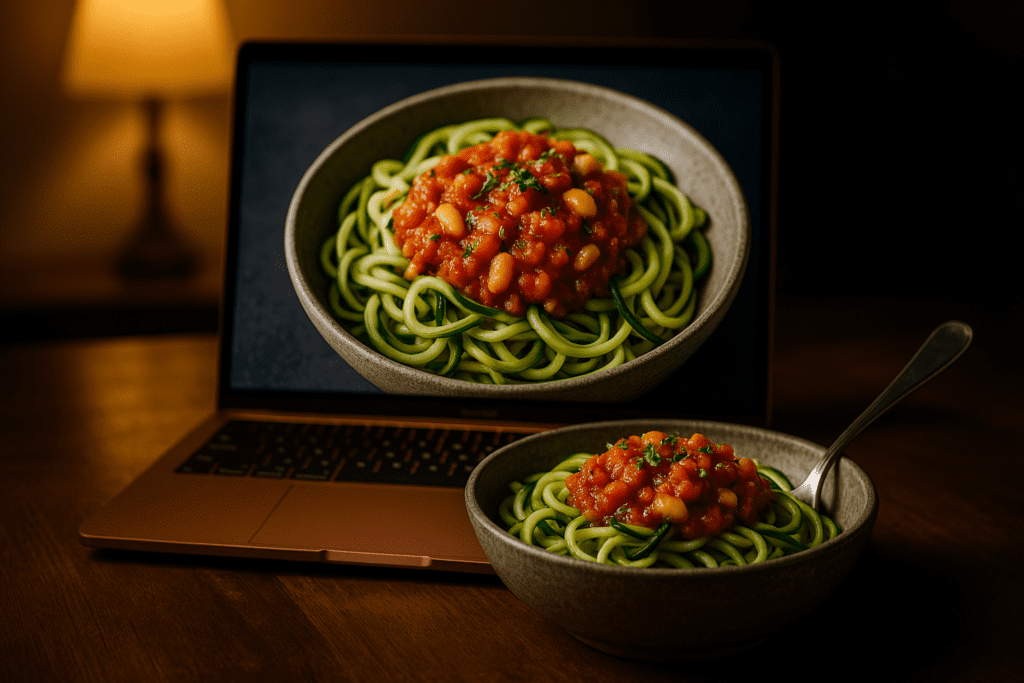

Smart Eating on a Budget: How to Create Cheap Healthy Meals Without Sacrificing Nutrition

In a world where the cost of living continues to rise and many families face financial constraints, making nutritious choices at the dinner table can feel like a luxury. However, the notion that healthy eating requires a high grocery bill is a persistent myth. In truth, with the right strategies, it is not only possible but entirely practical to enjoy cheap healthy meals without compromising nutritional value. This guide delves into the intersection of affordability and wellness, offering expert insights, practical applications, and creative culinary solutions for those striving to make every dollar count while still eating well.

The modern dietary landscape is often dominated by fast food and highly processed convenience meals, especially among households trying to make ends meet. These choices, though seemingly cost-effective in the short term, often come at the expense of long-term health. Yet, the growing popularity of healthy meals on a budget reflects a shift in public awareness. People are increasingly interested in how to eat healthy on a budget without losing out on essential nutrients, taste, or enjoyment. This article explores how thoughtful planning, mindful shopping, and kitchen creativity can lead to consistently delicious and nutritious outcomes—even when working with limited resources.

You may also like: Foods to Avoid While Detoxing: What to Cut for a Successful Cleanse

Rethinking Nutrition: Affordable Doesn’t Mean Inferior

One of the most damaging misconceptions is that nutritious foods are inherently expensive. While organic produce, grass-fed meats, and superfoods can carry a hefty price tag, they are not the only pathways to a wholesome diet. In fact, many of the most nutrient-dense foods—such as beans, lentils, oats, brown rice, sweet potatoes, cabbage, and frozen vegetables—are among the cheapest items in the grocery store. The key lies in understanding food density, meal composition, and how to combine inexpensive ingredients into cheap healthy dinners that satisfy both hunger and health.

Nutrition science continues to affirm the benefits of plant-forward eating patterns, which are often the most affordable. Meals built around legumes, grains, seasonal produce, and minimally processed ingredients can offer a robust profile of fiber, vitamins, minerals, and protein, all without straining your wallet. When paired with savvy shopping techniques and simple preparation methods, these inexpensive healthy meals become not just accessible, but deeply enjoyable. The truth is, eating well doesn’t require exotic ingredients or gourmet skills—just a bit of intention and planning.

A young African American woman with curly hair enjoys a homemade salad outdoors in a sunlit park during late afternoon. The warm natural light and serene expression capture the emotional satisfaction of healthy meals on a budget, while the vibrant greens and casual environment reflect a realistic approach to cheap healthy dinner ideas.

Strategic Shopping: Making Every Dollar Go Further

A cornerstone of building healthy affordable meals is knowing how and where to shop. Creating a flexible grocery list based on weekly deals, seasonal availability, and store brands can significantly reduce costs. Shopping in bulk for staples like whole grains, dried beans, and frozen fruits and vegetables is one of the most reliable ways to secure cheap wholesome meals. Many consumers overlook store-brand products, assuming they are inferior to name brands, but this is rarely the case in terms of nutritional content.

Another often-underutilized tactic is shopping with meals in mind. When consumers plan around what they already have at home and seek out ingredients that can be used in multiple ways, they eliminate waste and enhance meal flexibility. For example, a single bag of brown rice can stretch across stir-fries, soups, and grain bowls throughout the week. Likewise, a can of chickpeas might contribute to salads, stews, or a quick homemade hummus. When these habits are formed, creating healthy recipes on a budget becomes second nature, empowering families to shop with purpose and efficiency.

A cozy kitchen scene shows a woman writing in a notebook next to a countertop featuring potatoes, bell pepper, a reusable grocery bag, and a receipt. Illuminated by soft indoor lighting, the setup symbolizes meal planning and easy affordable healthy meals, offering a grounded depiction of how to eat healthy on a budget using everyday ingredients.

Mastering Meal Prep: The Secret to Long-Term Success

Meal preparation is more than a trendy social media concept—it’s a practical tool for those who want to consistently enjoy low cost easy healthy meals. By dedicating a few hours each week to preparing meals or key components in advance, busy individuals and families can reduce the temptation to rely on takeout or processed options. Cooked grains, roasted vegetables, pre-chopped produce, and batch-cooked proteins or legumes form the building blocks of cheap healthy meal ideas that are quick to assemble on busy weeknights.

This approach also simplifies the cooking process, reducing stress and decision fatigue. When the fridge is stocked with ready-to-go ingredients, making cheap and healthy dinner ideas is no longer a chore but a straightforward solution. Furthermore, meal prep encourages mindful portioning and balance, helping individuals better manage their intake of sodium, sugar, and unhealthy fats—common pitfalls in convenience eating. With thoughtful preparation, healthy meal ideas on a budget transition from abstract ideal to daily reality.

A therapy session unfolds in a softly lit, neutral-toned office where a middle-aged woman discusses smart food choices while holding a colorful salad. Her attentive expression and the calm setting convey emotional mindfulness and the importance of balanced, nutritious meals on a budget as part of overall well-being.

Culinary Creativity: Reinventing Leftovers and Staples

Embracing creativity in the kitchen is essential for transforming limited ingredients into diverse meals. Leftovers need not be repetitive or boring. Instead, they can be reimagined into entirely new dishes with minimal additional cost. A pot of chili might morph into burrito fillings or chili-stuffed sweet potatoes. Roasted vegetables can become the base for grain bowls, salads, or soups. This kind of culinary improvisation not only reduces waste but also fuels an ongoing rotation of cheap nutritious meals that keep mealtime interesting.

Moreover, understanding foundational cooking techniques—such as sautéing, roasting, steaming, and braising—opens up a world of possibilities. Learning to use herbs, spices, citrus, and vinegars to build flavor means that even simple dishes can feel gourmet. For instance, a basic lentil soup becomes an exciting dinner when brightened with lemon juice and fresh parsley. With a bit of practice, home cooks can transform basic pantry ingredients into easy cheap nutritious meals that rival restaurant fare in both taste and healthfulness.

Family-Friendly Strategies for Nutritious Budget Meals

Cooking for a household adds layers of complexity, but it also opens up unique opportunities to create cheap healthy meals for family settings. Involving children or other family members in planning, shopping, and cooking can foster a sense of shared responsibility and education around nutrition. Choosing meals that offer customization—such as taco bars, grain bowls, or DIY pizza nights—encourages participation and ensures that everyone feels included and satisfied.

Budget-conscious family meals can also benefit from batch cooking and freezer-friendly recipes. Dishes like vegetable lasagna, hearty stews, or black bean enchiladas can be prepared in large quantities, portioned, and frozen for future meals. This strategy reduces the need for nightly cooking and ensures a steady supply of healthy family meals on a budget. Ultimately, developing a repertoire of cheap healthy dinner ideas for family life provides both financial and emotional nourishment, making the dinner table a site of stability and joy.

Nutrition and Weight Management Without the High Price Tag

One of the most compelling motivations for eating well on a budget is the role diet plays in weight management and chronic disease prevention. Contrary to the belief that weight-conscious eating requires expensive health food products or trendy supplements, it is entirely feasible to enjoy healthy recipes for weight loss on a budget. By focusing on fiber-rich vegetables, lean proteins, whole grains, and portion control, individuals can achieve their health goals while adhering to modest grocery budgets.

Low calorie meals on a budget often center on high-satiety ingredients that curb overeating. Foods like lentils, quinoa, non-starchy vegetables, and broth-based soups are filling, nutrient-dense, and inexpensive. Choosing to prepare these foods at home allows for better control of added fats, sugars, and sodium—nutritional culprits that can undermine weight loss efforts. Moreover, home cooking fosters a mindful relationship with food, reducing the impulse-driven decisions often associated with fast food and packaged snacks.

Breaking Down the Myth of Inaccessibility

For too long, the idea of affordable nutrition has been clouded by stereotypes and misinformation. Many people equate healthy eating with expensive groceries, elaborate recipes, and time-consuming preparation. Yet the growing interest in cheap healthy recipes shows that accessibility and healthfulness are not mutually exclusive. Public health initiatives, community cooking classes, and online platforms have made it easier than ever to find cheap easy healthy meal ideas that fit within any lifestyle or dietary preference.

Even in food deserts or areas with limited access to fresh produce, strategic use of frozen or canned vegetables, dried legumes, and whole grains can yield nutritious meals on a budget. The proliferation of online resources means that anyone with internet access can learn how to prepare inexpensive dinner ideas healthy enough to support long-term well-being. With persistence and support, families and individuals can break free from the notion that healthy eating is only for the wealthy.

Frequently Asked Questions: Smart Eating on a Budget

1. How can I plan cheap healthy meals if I have no experience with cooking?

Even without a culinary background, it’s entirely possible to create cheap healthy meals by starting with simple, reliable recipes that focus on whole foods and minimal ingredients. Consider dishes like vegetable stir-fries, bean soups, and sheet pan roasted meals, which require little more than chopping and basic seasoning. Over time, you’ll become more confident with methods that help stretch ingredients into multiple healthy meals on a budget. Using online video tutorials and free mobile apps can guide you step-by-step through preparing inexpensive healthy meals. As your skills improve, you’ll gain more flexibility to create cheap healthy meal ideas tailored to your own tastes.

2. What strategies can help prevent burnout from eating the same cheap healthy dinners repeatedly?

Meal fatigue is a common challenge, especially when following a tight grocery budget. To maintain variety, rotate core ingredients—such as lentils, brown rice, or sweet potatoes—across different flavor profiles by using herbs, spices, and sauces from various global cuisines. For instance, lentils can be transformed into a Moroccan stew, Indian dal, or a Mediterranean salad, offering multiple inexpensive healthy meals from the same staple. Investing in a spice rack may seem like a splurge, but it enables dozens of cheap healthy meal ideas with minimal changes to the shopping list. This kind of flavor-driven rotation keeps cheap wholesome meals exciting and sustainable over time.

3. How can I make healthy family dinners on a budget when everyone in my household has different dietary needs?

Meeting diverse nutritional preferences doesn’t have to increase your food budget. Instead of preparing separate meals, choose build-your-own options like tacos, grain bowls, or baked potatoes with a variety of toppings. This allows everyone to assemble their own cheap healthy dinners from the same set of ingredients. Planning meals this way supports healthy family dinners on a budget without extra prep work or waste. It also empowers kids and picky eaters to get involved in the kitchen, making mealtime more interactive and enjoyable.

4. What are some lesser-known staples that support cheap and healthy dinner ideas for family use?

In addition to popular choices like beans and rice, underused but powerful ingredients include barley, bulgur wheat, and red lentils—all of which are high in fiber and protein yet cost only a fraction of the price of meat. Frozen spinach, canned pumpkin, and dry textured vegetable protein (TVP) are also affordable pantry additions that can significantly enhance cheap nutritious meals. These staples help create healthy affordable meals that deliver satiety and balance while remaining budget-friendly. When you incorporate these into soups, stews, casseroles, or curries, they enrich flavor and nutrition without stretching your wallet. Exploring international food aisles can often yield surprising discoveries for easy cheap nutritious meals.

5. How can I stick to healthy affordable meal ideas if I live in an area with limited access to fresh produce?

Living in a food desert or rural area doesn’t mean you’re excluded from healthy eating. Canned and frozen fruits and vegetables are excellent alternatives, offering nearly identical nutritional value to fresh options and often at a lower cost. When properly selected—look for no added salt or sugar—they become key components in cheap healthy recipes that don’t rely on seasonal availability. Community-supported agriculture (CSA) boxes, farmers’ markets, and food co-ops may offer reduced prices or sliding scales for low-income shoppers. With thoughtful planning, it’s entirely possible to assemble healthy meals on a budget even with limited resources, especially when you diversify your sources and keep a rotating pantry of shelf-stable basics.

6. Are there ways to make low calorie meals on a budget that still feel satisfying and filling?

Yes, creating low calorie meals on a budget that leave you full begins with focusing on volume-rich, fiber-dense foods like vegetables, legumes, and whole grains. Pairing protein with high-fiber carbs—such as lentils and quinoa or black beans and brown rice—promotes satiety and reduces the urge to snack between meals. Adding spices and acid (like lemon juice or vinegar) boosts flavor without adding calories or cost, making these meals feel indulgent. These principles are particularly helpful for people seeking healthy recipes for weight loss on a budget without falling into a cycle of hunger or restriction. Incorporating these strategies can make easy affordable healthy meals a consistent part of your weight management plan.

7. How can I find motivation to continue eating on a budget when time and energy are limited?

Motivation often dwindles when we’re overwhelmed, but keeping a few easy go-to meals in your rotation can ease the mental burden of meal decisions. Try creating a small, rotating menu of cheap healthy dinner recipes that are quick to prepare and require little cleanup—like one-pot soups or slow-cooker meals. Freezer meal prep sessions every few weeks can also provide a buffer during high-stress periods. Reframing cooking as a self-care or mindfulness practice can transform it into a rewarding ritual rather than a chore. The more you align healthy affordable meal ideas with your lifestyle rather than viewing them as another task, the easier it becomes to stick to them long term.

8. What role does batch cooking play in reducing food waste and saving money?

Batch cooking is one of the most effective techniques for minimizing waste and maximizing value from your grocery haul. Preparing meals in large quantities allows you to portion them throughout the week or freeze extras for later, reducing impulse purchases and nightly cooking stress. This strategy makes it easier to maintain healthy family meals on a budget, especially when juggling work and school schedules. Leftover ingredients can be repurposed into easy cheap nutritious meals rather than thrown away, extending their value across multiple dishes. Batch cooking also supports a predictable and efficient grocery list, helping to streamline your approach to eating on a budget.

9. How can I adapt healthy recipes on a budget for special occasions or entertaining guests?

Hosting doesn’t have to mean breaking the bank. Focus on crowd-pleasers like build-your-own chili bars, pasta salads, or baked potato buffets that are hearty, nutritious, and scalable. You can elevate cheap healthy meals with thoughtful presentation, such as garnishing with fresh herbs or serving in colorful dishes. Use inexpensive dinner ideas healthy enough for everyday meals but dress them up with small touches—like homemade sauces or infused water—for a festive flair. With a bit of creativity, cheap healthy dinner ideas for family settings can double as impressive and satisfying meals for guests, reinforcing that affordability doesn’t have to come at the expense of elegance or enjoyment.

10. What are some emerging trends in the world of cheap healthy easy meals?

Technology and community initiatives are shaping new ways to access nutritious meals on a budget. For example, apps that track grocery store discounts or offer recipe suggestions based on what’s in your pantry are helping consumers reduce waste and save money. Urban gardening and container farming are also becoming more common in city environments, making it easier to grow herbs or leafy greens at home. These innovations support a broader movement toward healthy affordable meals that don’t rely on traditional supply chains or upscale stores. Additionally, more dietitians and chefs are sharing cheap healthy easy meals through social media, creating a wealth of accessible inspiration for those pursuing healthy meal ideas on a budget. These trends are expanding what’s possible for low cost easy healthy meals in everyday life.

Conclusion: Empowering Health Through Budget-Conscious Choices

Ultimately, the ability to craft cheap healthy meals is a matter of mindset, knowledge, and a willingness to experiment. While financial constraints are real, they need not be a barrier to healthful living. With the right strategies—ranging from smart shopping and meal planning to batch cooking and creative reuse—any household can master the art of eating on a budget. The journey toward healthy affordable meals is not about restriction or deprivation, but about maximizing flavor, nourishment, and satisfaction with the resources available.

Incorporating cheap wholesome meals into daily life is an act of empowerment, one that reclaims the kitchen as a place of vitality rather than stress. As the demand for cheap healthy family dinners continues to rise, so does the availability of resources, tools, and community support. The shift toward accessible wellness reflects a larger societal understanding: that everyone deserves the opportunity to eat well, feel good, and live fully—regardless of income. And in that spirit, the path to vibrant health is not paved with extravagance, but with simplicity, creativity, and care.

budget-friendly nutrition, affordable meal planning, healthy cooking tips, grocery savings strategies, plant-based budget meals, family meal planning, frugal eating habits, cooking with pantry staples, homemade meals on a budget, eating well for less, affordable clean eating, nutritious food swaps, healthy eating lifestyle, cooking for a family on a budget, efficient grocery shopping, meal prep for busy families, mindful grocery choices, low-budget meal prep, kitchen skills for beginners, seasonal eating strategies

Further Reading:

Eating Well on a Budget

19 Ways to Eat Healthy on a Tight Budget

Smart Eating on a Budget: How to Save without Sacrificing Your Nutrition

Disclaimer

The information contained in this article is provided for general informational purposes only and is not intended to serve as medical, legal, or professional advice. While NewsHealthWatch strives to present accurate, up-to-date, and reliable content, no warranty or guarantee, expressed or implied, is made regarding the completeness, accuracy, or adequacy of the information provided. Readers are strongly advised to seek the guidance of a qualified healthcare provider or other relevant professionals before acting on any information contained in this article. NewsHealthWatch, its authors, editors, and contributors expressly disclaim any liability for any damages, losses, or consequences arising directly or indirectly from the use, interpretation, or reliance on any information presented herein. The views and opinions expressed in this article are those of the author(s) and do not necessarily reflect the official policies or positions of NewsHealthWatch.

Влияние искусственного интеллекта на операции казино

0

Искусственный интеллект (ИИ) революционизирует индустрию казино, повышая эксплуатационную эффективность и повышая взаимодействие с клиентами. В прошлые годы казино постепенно приняли инструменты искусственного интеллекта для изучения действий игроков, оптимизации выбора игр и адаптирующих маркетинговых подходов. Согласно исследованию, проведенному Deloitte 2023 года, ожидается, что интеграция AI в казино увеличит доходы до 30% в течение следующих пяти периодов.

Один выдающийся человек в этой трансформации – Дэвид Шварц, известный историк игр и предыдущий директор Центра игровых исследований в Университете Невады, Лас -Вегас. Его взгляды на включение технологий в игры можно отслеживать на его профиль Twitter . Шварц подчеркивает, что ИИ может помочь казино улучшить вкусы игрока, что приводит к персонализированным рекламным акциям и улучшенным инициативам лояльности.

В 2022 году Wynn Las Vegas представила чат-бот поддержки клиентов, управляемый AI, который помогает гостям с запросами и бронированием, значительно сокращая время ожидания. Это продвижение не только повышает встречу с гостем, но и позволяет персоналу сосредоточиться на более сложных требованиях клиентов. Для получения дополнительной информации о роли технологий в казино, посетите The New York Times .

Кроме того, модели ИИ используются для определения обманчивых действий и обеспечения просто игры. Оценивая огромные объемы данных в режиме реального времени, казино могут распознавать сомнительные закономерности и быстро делать шаги. Поскольку индустрия продолжает прогрессировать, игрокам крайне важно оставаться в курсе этих достижений. Узнайте больше об ИИ в развлечениях на мотор казино.

В то время как ИИ предлагает бесчисленные преимущества, игроки должны оставаться осторожными и выбирать авторизованные казино, которые подчеркивают защиту и разумную практику игр. Перспективы поля казино выглядят многообещающими с ИИ на переднем крае, продвигая инновации и усиливая общую игровую встречу.

How to Choose the Best Healthy Meal Delivery Service for Your Lifestyle: A Guide to Nutritious, Ready-to-Eat Options You Can Trust

Introduction: The Rise of Healthy Meal Delivery Services in a Fast-Paced World

In an era where convenience often dictates our food choices, the surge in demand for healthy meal delivery services comes as no surprise. For busy professionals, parents juggling work and family life, or health-conscious individuals looking to improve their diet, these services provide a bridge between nutritious eating and modern-day time constraints. The best healthy meal delivery service is no longer a luxury—it’s fast becoming a practical solution for anyone committed to clean eating, weight management, or specific dietary needs.

What sets apart the healthiest food delivery options is their focus on balanced nutrition, ingredient transparency, and culinary quality. With so many companies now offering healthy premade food and diet-specific plans, it can be overwhelming to choose the right one. Whether you’re looking for the top 5 healthiest meal kit programs, the best rated diet meal delivery plans, or healthy breakfast delivery tailored to your mornings, the landscape is vast and varied.

This guide will walk you through the essential factors to consider when selecting a healthy meal delivery service. We’ll also explore the types of services available, how they support your health goals, and which ones deliver the best value, taste, and nutritional integrity. Our insights are grounded in evidence-based recommendations and a firm commitment to EEAT principles—experience, expertise, authoritativeness, and trustworthiness—ensuring that you’re empowered to make informed, confident decisions for your health.

You may also like: Smart Eating on a Budget: How to Create Cheap Healthy Meals Without Sacrificing Nutrition

Understanding What Makes a Meal Delivery Service “Healthy”

The definition of a healthy meal delivery service extends beyond mere calorie counting or offering vegetarian options. A truly healthy service incorporates whole, nutrient-dense ingredients, offers balanced macronutrient profiles, and supports long-term well-being. Look for companies that highlight whole grains, plant-based proteins, heart-healthy fats, and seasonal produce in their menus. These components form the foundation of healthy ready to eat meals that don’t sacrifice taste for nutrition.

Transparency is another crucial component. Services that clearly label ingredients, nutritional values, and sourcing practices establish greater consumer trust. This is especially important for individuals with food allergies, intolerances, or dietary restrictions. For instance, someone managing hypertension or diabetes would benefit from clean eating meal delivery plans that limit sodium and refined carbohydrates while emphasizing fiber-rich vegetables and legumes.

Reputation and professional involvement matter, too. A health food subscription backed by registered dietitians or medical experts lends credibility to its offerings. When evaluating the healthiest ready to eat meals, prioritize companies that demonstrate a commitment to evidence-based practices, sustainable sourcing, and ongoing product improvement. In today’s digital age, user reviews also play a role, offering first-hand accounts of taste, convenience, and satisfaction.

In a softly lit kitchen, a young Caucasian woman with fair skin and a ponytail smiles as she eats a healthy meal from a delivery container, seated alone at a tidy wooden table. The warm natural light and uncluttered setting emphasize the ease and joy of selecting trustworthy, ready-to-eat meals for healthy living.

Types of Healthy Meal Delivery Services and Their Key Differences

Navigating the world of meal delivery can be daunting given the wide array of formats available. Broadly speaking, these services fall into three categories: meal kits, premade meals, and hybrid models. Each has unique benefits depending on your lifestyle, culinary skills, and health goals.

Meal kits appeal to those who enjoy cooking but want to skip meal planning and grocery shopping. The top 5 healthiest meal kit programs typically provide pre-portioned ingredients and step-by-step recipes. They’re a great choice for individuals looking to learn new cooking techniques while still maintaining control over what goes into their meals. These kits often emphasize whole foods and allow for some customization based on dietary needs.

In contrast, healthy premade food options cater to those with little time to cook. These meals arrive fully prepared and only require reheating. For people with demanding schedules, premade clean meals delivered straight to their door can make all the difference in maintaining a consistent, balanced diet. The best healthy food delivery services in this category prioritize fresh, preservative-free ingredients and accommodate various dietary patterns, from plant-based to paleo.

Hybrid models combine elements of both approaches. You might receive a base meal that allows optional finishing touches, such as adding a fresh garnish or final sauce drizzle. This format is ideal for people who want a semi-homemade experience without the hassle of starting from scratch. When you order healthy food online, understanding these distinctions helps you choose the format that aligns best with your lifestyle.

A photorealistic close-up shows a spiral-bound notebook with handwritten wellness notes beside a ceramic mug and a fresh meal delivery container featuring salmon, quinoa, and vegetables. Captured in warm indoor light, this minimalist scene symbolizes mindful eating choices and reinforces the value of healthy meal planning.

Evaluating the Nutritional Quality of Meal Plans

One of the most critical aspects of selecting a meal service is its commitment to nutritional integrity. The best rated diet meal delivery plans are not necessarily those with the fewest calories, but those that offer balanced macronutrients, support weight maintenance or loss, and provide satiety through whole-food ingredients. The healthiest food delivery services make it easier to achieve dietary goals without constant calorie counting or restrictive eating.

Portion size and balance are central to nutritional adequacy. Meals should contain a reasonable ratio of lean protein, complex carbohydrates, and healthy fats. Services that include plenty of fiber from vegetables, legumes, and whole grains help regulate blood sugar and improve digestion. These principles are especially important in clean eating meal delivery programs designed to support long-term metabolic health.

Look for services that clearly label their meals with nutritional breakdowns, including calories, protein, fiber, sugar, and sodium content. This level of transparency empowers consumers to make informed decisions. Whether you’re selecting the best delivered diet meals for weight loss or simply seeking healthy food ready to eat on busy nights, these details can make or break the success of your efforts.

Some companies go a step further by tailoring plans for specific health goals. The best food delivery weight loss programs often include personalized assessments, portion-controlled meals, and continuous support. These features provide structure for those trying to reduce body fat or manage chronic conditions through diet, making the entire process more sustainable and less stressful.

A woman with medium brown skin sits on a sofa at night, softly illuminated by a nearby lamp, holding a healthy meal while participating in an online therapy session. The moody lighting and reflective atmosphere underscore the importance of mental wellness and making thoughtful decisions about nutritious food delivery services.

Sustainability, Sourcing, and Ingredient Integrity

A truly holistic approach to healthy eating includes considering where your food comes from and how it’s produced. Today’s conscious consumer demands more than just nutritional benefits—they also want ethical sourcing and sustainable packaging. The best healthy food delivery companies respond to this demand by prioritizing organic produce, responsibly raised proteins, and eco-friendly practices.

When evaluating a health food box or clean eating meal delivery service, inquire about the origin of its ingredients. Companies that source from local farms or certified organic suppliers often offer fresher, more nutrient-dense meals. Additionally, those that support regenerative agriculture or avoid antibiotics and synthetic additives align better with health and environmental priorities.

Packaging also plays a role in sustainability. While individual meal containers are sometimes necessary for portion control and food safety, look for services that use recyclable, compostable, or reusable materials. A commitment to reducing waste reflects a brand’s overall integrity and is especially appealing to environmentally conscious consumers.

Transparency in ingredient lists is also a hallmark of trustworthy brands. Meals should avoid artificial preservatives, high-fructose corn syrup, and synthetic flavorings. Instead, the healthiest ready to eat meals should rely on herbs, spices, and whole-food ingredients for flavor. Services that meet these standards consistently earn praise as the best healthy food delivery options on the market.

Customization, Flexibility, and Personalization Features

Modern consumers expect more than a one-size-fits-all approach to nutrition. The most successful healthy eating services allow for personalized meal plans based on dietary preferences, allergies, activity level, and specific health goals. Whether you’re following a Mediterranean, plant-based, gluten-free, or high-protein diet, flexibility is key.

The best healthy meal delivery service for your needs will offer ample customization options during signup. This might include selecting from rotating menus, filtering meals by ingredients, or choosing portion sizes based on caloric needs. Some services even offer direct input from registered dietitians, helping you build a menu tailored to your lifestyle and health targets.

For individuals managing chronic conditions or pursuing weight management, personalized plans can be transformative. The best home meal delivery for weight loss might include smaller portions, carb-conscious options, and meals rich in fiber and lean protein. For others, healthy breakfast delivery that provides high-protein, low-sugar choices can improve energy and mood throughout the day.

Another feature to consider is subscription flexibility. A good health food subscription allows you to skip weeks, pause your plan, or adjust delivery frequency. This flexibility supports long-term adherence and ensures that the service continues to align with your evolving needs. Whether you’re transitioning into a new fitness routine, recovering from illness, or adjusting to a new schedule, meal plan adaptability is essential.

Affordability and Value for Money

Cost is often a deciding factor when choosing between different healthy eating services. While it’s true that clean meals delivered to your home might cost more than cooking from scratch, the added convenience, quality, and health benefits often justify the expense. The key is to determine which service offers the best balance of cost, quality, and nutritional benefit for your budget.

Many companies offer tiered pricing based on meal frequency, ingredients, or level of customization. When comparing the best rated diet meal delivery plans, pay close attention to price per serving, delivery fees, and available promotions. Some services also offer referral discounts, student deals, or loyalty programs that reduce long-term costs.

It’s also worth considering the hidden value of healthy diet delivery options. When you account for saved time, reduced food waste, and fewer grocery runs, the actual cost gap may narrow significantly. Additionally, maintaining a balanced diet through these services can potentially reduce long-term healthcare expenses by helping manage or prevent chronic disease.

For families or couples, some meal plans offer family-sized portions or child-friendly options that increase overall value. The best delivered diet meals for households might also include snacks, smoothies, or pantry staples that eliminate the need for supplemental shopping. This all-inclusive model further supports a consistent, hassle-free approach to healthy eating.

Customer Support, Reviews, and Brand Reputation

The experience of using a healthy food delivery service goes beyond the meals themselves. A brand’s customer support, responsiveness, and communication practices can dramatically affect overall satisfaction. When evaluating your options, look for services that provide clear FAQs, easy-to-use mobile apps, and responsive help channels.

Customer reviews offer real-world insights into consistency, meal taste, portion sizes, and customer service interactions. When several users consistently praise a brand for delivering healthy food ready to eat with great flavor and reliable packaging, that’s a good sign. Look for services that maintain high ratings not only for their meals but also for their delivery punctuality and issue resolution.

Some of the best healthy food delivery companies also maintain active social media communities or educational blogs, offering recipes, wellness tips, and nutrition guidance. These platforms create opportunities for ongoing engagement and foster trust in the brand’s mission. By combining quality food with a supportive customer experience, these companies build loyal communities that reflect the values of mindful eating.

Reputation also matters when it comes to brand partnerships. A company affiliated with registered dietitians, medical professionals, or health institutions likely has higher credibility and adheres to evidence-based practices. This level of authority and transparency aligns perfectly with EEAT standards and gives consumers the confidence to invest in their services long term.

Frequently Asked Questions (FAQ): Choosing the Best Healthy Meal Delivery Service for Your Lifestyle

1. What are some lesser-known benefits of using a healthy meal delivery service besides convenience?

Beyond saving time and reducing kitchen cleanup, using the best healthy meal delivery service can significantly impact emotional well-being, food waste reduction, and meal consistency. Many people experience decision fatigue when planning weekly meals, and healthy eating services alleviate this by offering curated, nutritionally balanced options without the stress of planning. Additionally, because ingredients are portioned or meals are already prepared, users report a noticeable drop in food waste—an environmentally and economically significant advantage. For individuals recovering from illness or managing a chronic condition, regular access to healthy food ready to eat can support a smoother recovery through consistent nutrition. Moreover, some people find that subscribing to clean eating meal delivery options inspires long-term changes in their approach to mindful eating, as the exposure to diverse, balanced meals often introduces them to new ingredients or cooking techniques they would not have tried independently.

2. How can someone with very specific dietary needs find the right meal delivery service?

Individuals with highly specific dietary needs—such as low-FODMAP, autoimmune paleo, or renal-friendly diets—should focus on customizable healthy eating services that allow direct input or consultation with registered dietitians. While many of the top 5 healthiest meal kit programs offer generalized plans (like gluten-free or vegan), advanced personalization is often available through companies that specialize in therapeutic nutrition. Look for services that provide ingredient-level control or medical-grade formulations. Health food subscriptions that collaborate with healthcare professionals or dietetic boards tend to be more reliable when it comes to catering to medical conditions. If you need meals tailored to complex needs, consider reaching out to the company’s customer support team before you order healthy food online to verify they can meet your requirements.

3. What trends are shaping the future of healthy premade food and meal delivery services?

One of the most exciting developments is the integration of personalized nutrition using AI algorithms and biomarker data. In the near future, healthy diet delivery services may offer meals tailored to your blood sugar response, microbiome composition, or genetic markers. Already, some companies in the healthiest food delivery space are experimenting with dynamic menu adjustments based on wearable fitness trackers or at-home lab results. Another trend is the rise of regional sourcing networks, where meals are crafted using ingredients from local farms, reducing the environmental impact and increasing freshness. As demand for sustainability grows, expect to see more clean meals delivered in fully compostable or reusable packaging, further aligning with the values of health-conscious consumers. These innovations will elevate the best healthy food delivery providers beyond convenience, transforming them into holistic wellness tools.

4. Can meal delivery services support healthy weight loss in a sustainable way?

Absolutely—when thoughtfully selected, the best food delivery weight loss programs can serve as a cornerstone of sustainable, long-term health improvement. Rather than relying on deprivation or extreme calorie restriction, the best delivered diet meals emphasize balance, satiety, and nutrient density. By removing guesswork and portion distortion from the equation, these services reduce the likelihood of impulsive eating or late-night snacking. Healthy breakfast delivery, in particular, can be pivotal for those trying to lose weight, as starting the day with a high-protein, fiber-rich meal helps regulate appetite and energy levels. Sustainable weight loss isn’t about short-term fixes—it’s about consistency, and a healthy diet delivery service can provide that consistency with ease and variety.

5. How can meal delivery services support mental health and reduce decision fatigue?

One often-overlooked benefit of healthy premade food services is their positive impact on mental clarity and stress reduction. When you’re overwhelmed with decisions throughout the day—from meetings to family responsibilities—eliminating the daily “what’s for dinner?” dilemma can be a huge relief. The best rated diet meal delivery plans often include curated meal paths, taking the pressure off individuals who otherwise experience anxiety around meal planning or food preparation. This is particularly helpful for those recovering from burnout or managing conditions like ADHD, where executive function can be compromised. Furthermore, the consistent nourishment provided by healthy ready to eat meals can improve mood regulation, blood sugar stability, and sleep—factors directly tied to mental health and emotional resilience.

6. Are there healthy eating services that focus on international or cultural cuisines?

Yes, and this is a growing niche within the healthiest food delivery industry. While many services start with Western or Mediterranean-style menus, an increasing number are offering culturally authentic meals from Asian, Middle Eastern, African, and Latin American traditions. These meals are not only delicious but also celebrate diversity while remaining rooted in whole, nourishing ingredients. A health food subscription that includes rotating global menus can help users diversify their palate and access traditional superfoods that may not be available in mainstream American cuisine. If you want to combine clean meals delivered to your door with cultural enrichment, look for services that highlight heritage-inspired dishes crafted with dietitian input.

7. How can busy families make the most of a healthy food box subscription?

Families often struggle with finding meal options that are healthy, time-efficient, and universally enjoyed. The best healthy food delivery services now offer family-style plans with larger portions, kid-friendly adaptations, and even interactive cooking kits that turn mealtime into a bonding activity. For example, some of the top 5 healthiest meal kit programs allow children to participate in meal assembly, promoting healthy food literacy from an early age. Other companies offer “add-ons” such as snacks, smoothies, or healthy breakfast delivery options to streamline morning chaos. A health food box tailored for families can significantly reduce midweek stress while reinforcing positive food behaviors across generations. To maximize value, families should also look for clean eating meal delivery services that allow plan flexibility and batch ordering.

8. What should consumers be aware of when evaluating meal delivery services marketed as “healthy”?

The term “healthy” is broad and often loosely defined in marketing. Consumers should look beyond labels and examine nutritional profiles, ingredient sourcing, and preparation methods. For instance, a service may advertise clean meals delivered weekly, but if those meals are high in sodium or low in fiber, they may not align with long-term health goals. Truly the best healthy food delivery companies provide transparent nutrition facts, avoid ultraprocessed ingredients, and prioritize whole, minimally refined foods. It’s also worth checking if the company is certified by third-party organizations, such as the Non-GMO Project or USDA Organic. Transparency and evidence-backed design are the best markers of quality in healthy eating services.

9. Can a health food subscription be cost-effective in the long run?

Though the initial cost per meal may seem higher than buying groceries, a well-structured health food subscription can actually save money over time. Reduced food waste, fewer impulse purchases, and less frequent grocery trips all contribute to economic efficiency. Additionally, the preventative health benefits of eating well—such as reduced risk of cardiovascular disease, obesity, and type 2 diabetes—can translate to lower medical bills down the road. When comparing the best rated diet meal delivery plans, also consider the value of time saved, which can be redirected toward work, family, or self-care. Smart planning—such as opting for lunch-only plans during workdays or bundling healthy breakfast delivery with other meals—can further increase the subscription’s practicality and cost-effectiveness.

10. How do healthy meal delivery services impact long-term eating habits and lifestyle transformation?

One of the most profound but subtle benefits of using the best healthy meal delivery service is the formation of consistent, positive eating habits that persist even when the subscription ends. Repeated exposure to balanced meals with appropriate portions helps retrain the palate and reframe expectations around what a meal should look like. Many users find that after a few months of receiving healthy food ready to eat, they become more confident in recreating similar meals on their own. The structure provided by clean eating meal delivery plans often spills over into grocery shopping, dining out, and even snacking behavior. As users develop a deeper appreciation for nutrient-dense, whole-food meals, their lifestyle begins to shift toward mindful, intentional eating. This long-term behavioral change is one of the greatest gifts of engaging with the best home meal delivery for weight loss or overall wellness.

Conclusion: Making an Informed Decision for Long-Term Health and Satisfaction

Choosing the best healthy meal delivery service is more than a matter of convenience—it’s an investment in your well-being, your time, and your quality of life. With the abundance of options available, it’s never been easier to find a service that aligns with your dietary goals, ethical values, and lifestyle demands. Whether you’re exploring a health food subscription to support clean eating or looking for the best home meal delivery for weight loss, the key is to prioritize services that emphasize transparency, flexibility, and nutritional integrity.

From healthy premade food to the top 5 healthiest meal kit programs, the spectrum of offerings continues to expand. Yet, it is the brands that go beyond the basics—offering sustainable sourcing, expert-backed meal plans, and responsive customer care—that stand out as the healthiest food delivery options. When done right, these services not only simplify your daily routine but also empower you to eat with intention, nourish your body, and cultivate lasting wellness.

Ultimately, the right choice comes down to understanding your unique needs and committing to a solution that supports your long-term health. By considering the factors outlined in this guide, you can confidently select a service that brings clean meals delivered with care, integrity, and nutritional excellence—helping you thrive one meal at a time.

meal prep services for busy lifestyles, nutritious meals delivered, healthy food for busy professionals, organic meal delivery options, whole food meal plans, plant-based meal services, portion-controlled meal delivery, time-saving healthy meals, heart-healthy meal delivery, wellness-focused eating, eco-friendly meal kits, family-friendly meal plans, fresh meal delivery solutions, sustainable food delivery, chef-curated healthy meals, gluten-free meal services, anti-inflammatory meal delivery, nutritionist-approved meals, balanced eating habits, mindful nutrition solutions

Further Reading:

Best Healthy Meal Delivery: 11 to Try

Ultimate Guide to Choosing Prepared Meal Delivery Service

10 RD-Approved Meal Delivery Services That Are Perfect for Families

Disclaimer

The information contained in this article is provided for general informational purposes only and is not intended to serve as medical, legal, or professional advice. While NewsHealthWatch strives to present accurate, up-to-date, and reliable content, no warranty or guarantee, expressed or implied, is made regarding the completeness, accuracy, or adequacy of the information provided. Readers are strongly advised to seek the guidance of a qualified healthcare provider or other relevant professionals before acting on any information contained in this article. NewsHealthWatch, its authors, editors, and contributors expressly disclaim any liability for any damages, losses, or consequences arising directly or indirectly from the use, interpretation, or reliance on any information presented herein. The views and opinions expressed in this article are those of the author(s) and do not necessarily reflect the official policies or positions of NewsHealthWatch.

Affordable Healthy Lunch Ideas That Actually Taste Good: Smart, Budget-Friendly Meals for Work and Home

Eating Well on a Budget: Why Affordable Lunches Matter More Than Ever

With rising food prices and increasingly hectic schedules, finding affordable healthy lunch options has become a necessity rather than a luxury. For many people, lunch is the meal most likely to be skipped, rushed, or replaced with a quick, unhealthy bite. But building a consistent habit of packing or preparing a nutritious, budget-friendly lunch can significantly improve both your physical health and financial stability. When you rely on homemade meals rather than daily takeout, you not only save hundreds of dollars each month but also gain greater control over what you’re putting into your body. Crafting cheap healthy lunch ideas doesn’t require advanced culinary skills or expensive ingredients—it just takes a little planning, creativity, and a shift in mindset.

Cheap and healthy lunch meals also support long-term wellness by minimizing reliance on processed foods high in sodium, sugar, and unhealthy fats. Instead of settling for convenience store snacks or $15 salads, learning to prepare low cost lunch meals at home allows you to design meals that are nutrient-rich, satisfying, and enjoyable. Whether you’re feeding yourself, your family, or packing meals for work, the ability to consistently prepare inexpensive healthy lunches is a practical life skill with lasting rewards.

You may also like: Smart Eating on a Budget: How to Create Cheap Healthy Meals Without Sacrificing Nutrition

The Foundation of a Cheap and Healthy Lunch

A satisfying lunch doesn’t have to come from a restaurant or meal delivery service. In fact, some of the most delicious meals can be made right at home using whole, inexpensive ingredients. Staples like rice, beans, lentils, oats, and frozen vegetables are not only incredibly affordable but also packed with essential nutrients like fiber, protein, and complex carbohydrates. These ingredients are the foundation of many budget lunch ideas that are as nourishing as they are cost-effective.

The key to crafting a good cheap lunch idea is to focus on variety and balance. Each meal should ideally include a plant-based protein, a complex carbohydrate, and at least one or two servings of vegetables. For instance, a lentil and brown rice bowl with roasted carrots and broccoli offers both nutritional density and satiety at a low cost. Affordable lunches can also be enhanced with herbs, spices, and sauces, which are small investments that elevate flavor without adding to your grocery bill.

Additionally, shopping with intention—such as buying seasonal produce, choosing store brands, and planning meals around sales—can help you create cheap lunch meals without compromising taste. These strategies allow you to make the most of your grocery budget while enjoying a variety of easy inexpensive lunch ideas throughout the week.

A woman with curly dark hair and light brown skin enjoys a low-cost, nutritious lunch featuring salad and chickpeas while sitting on a park bench surrounded by greenery. Soft natural light enhances the peaceful, budget-friendly atmosphere of mindful lunchtime choices.

Meal Prepping for Success and Simplicity

One of the most efficient ways to ensure that you always have cheap and easy lunch ideas for work is by embracing the power of meal prepping. Spending just a couple of hours each weekend preparing a few components—like cooked grains, chopped vegetables, baked tofu, or homemade sauces—can simplify your life and set you up for a week of healthy eating. When you prep in advance, you’re less likely to rely on expensive takeout or skip meals altogether.

Meal prepping also helps reduce food waste, a major contributor to unnecessary grocery expenses. By using up perishable ingredients and rotating leftovers into your lunches, you make full use of what you buy. For example, if you roast a tray of vegetables and cook a batch of quinoa on Sunday, you can enjoy a roasted veggie grain bowl on Monday, wrap the same ingredients in a tortilla on Tuesday, and toss them into a soup or salad on Wednesday. This approach makes cheap and healthy lunch ideas feel fresh and new throughout the week.

Packing meals into reusable containers not only supports sustainability but also encourages proper portion control. For those looking for affordable healthy lunch ideas that travel well, consider dishes like pasta salads with beans and veggies, mason jar salads layered with grains and greens, or chickpea curry with brown rice. These meals hold up well in the fridge and maintain flavor and texture over several days.

A light-skinned woman in an olive-green shirt and jeans smiles gently as she eats a colorful, healthy meal of quinoa salad, pasta, and steamed broccoli on a park bench. The soft sunlight and casual setting support the theme of affordable healthy lunches that taste good.

Delicious Cheap Lunch Recipes That Don’t Feel Like a Sacrifice

A big reason why people avoid bringing lunch from home is the fear of boredom or lack of taste. Fortunately, affordable lunches can be just as flavorful—if not more so—than the pricey alternatives from cafés and restaurants. It all comes down to variety and seasoning. By experimenting with global flavors and diverse textures, you can create cheap lunch meals that taste gourmet without the gourmet price tag.

One beloved option is a black bean burrito bowl. Start with a base of brown rice or quinoa, add seasoned black beans, corn, diced tomatoes, lettuce, and a dollop of salsa or guacamole. Not only is this dish rich in protein and fiber, but it’s also customizable and costs only a few dollars per serving. Another example is a Mediterranean-inspired chickpea salad with cucumbers, tomatoes, olives, and lemon-olive oil dressing. It’s refreshing, satisfying, and made with affordable pantry staples.

Soups and stews are another budget-friendly option that can be made in large batches and frozen for future meals. A hearty lentil and vegetable soup, for example, is one of the most popular cheap and healthy lunch ideas, as it’s filling, comforting, and loaded with nutrients. Add a slice of whole grain bread or a small side salad, and you’ve got a well-rounded, inexpensive lunch that tastes as good as it feels.

A fair-skinned young woman with light brown hair calmly enjoys a forkful of fresh salad from a simple meal container, seated on a park bench near a tree-lined path. The soft outdoor lighting and natural background highlight practical and delicious lunch ideas on a budget.

Turning Leftovers into Gourmet Lunches

Leftovers often get a bad reputation, but they’re a goldmine for budget-conscious meal planning. Instead of eating the exact same dinner again for lunch, try transforming leftovers into new dishes. For example, leftover roasted sweet potatoes and black beans can be used to make tacos, wraps, or even added to a salad with a creamy avocado dressing. These transformations help you create a series of cheap and easy lunch ideas for work without repeating the same exact meal.

Rice from last night’s stir-fry can be turned into a quick fried rice with scrambled egg and frozen peas, while roasted vegetables from dinner can be puréed into a soup with a little vegetable broth and garlic. These reimagined meals not only reduce food waste but also keep lunch exciting and flavorful.

When planning dinners, consider doubling the recipe intentionally so you have enough for the next day’s lunch. This kind of batch cooking creates an ongoing cycle of cheap lunch recipes for work that practically prepare themselves. You’ll not only save money and time, but you’ll also have a delicious, homemade meal waiting for you every day.

Quick and Easy Inexpensive Lunch Ideas for Busy Schedules

For those who work long hours or have tight schedules, time-saving lunch options are essential. That’s where quick lunch ideas for work on a budget become particularly useful. Some of the best affordable lunch ideas can be assembled in just 10 to 15 minutes, especially when you keep a well-stocked kitchen.

An easy go-to is a whole grain wrap filled with hummus, shredded carrots, spinach, and leftover roasted veggies. It’s portable, plant-based, and full of fiber and healthy fats. Another option is a yogurt parfait with granola and frozen berries, which works well for lighter lunches or as part of a larger meal. Overnight oats, chia seed puddings, and smoothie jars also make fantastic no-cook, inexpensive healthy lunch ideas for warmer months.

Keep canned beans, corn, and diced tomatoes in your pantry and you can whip up a three-bean salad with olive oil and vinegar in under five minutes. These meals are not only cheap lunch options, but they also deliver on taste and nutrition—making them ideal for people who are short on time but still want to eat well.

Creative Ways to Add Flavor to Affordable Meals

A common misconception is that inexpensive meals are bland or boring. In reality, cheap and healthy lunch recipes can be bursting with flavor when you know how to use herbs, spices, and condiments effectively. Even the simplest dishes can be transformed with just a few additions, like a drizzle of tahini, a sprinkle of smoked paprika, or a splash of lemon juice.

One helpful strategy is to keep a few versatile sauces on hand—such as hummus, tzatziki, or peanut sauce—that can be added to bowls, wraps, and salads to boost flavor and variety. These sauces are inexpensive to make at home and offer a way to keep meals interesting without adding much to your budget.

Fermented foods like pickles, sauerkraut, or kimchi can also add tangy complexity to cheap lunch meals while supporting gut health. A bit of sharp feta or a few toasted nuts sprinkled on top can elevate even the most basic grain bowl or salad, making your lunch feel indulgent and exciting without breaking the bank.

Why Affordable Healthy Lunches Support Your Long-Term Health

While the appeal of cheap fast lunch ideas often lies in immediate convenience and cost savings, the long-term health benefits are equally compelling. A regular habit of preparing low cost lunch meals at home allows you to avoid highly processed, high-calorie foods that can contribute to chronic disease. When your meals center around whole grains, legumes, vegetables, and healthy fats, you’re supporting digestive health, blood sugar stability, and cardiovascular wellness.

Consistent, balanced lunches also contribute to improved energy levels throughout the day, helping you avoid the midday crash that often follows a high-sugar, low-nutrient meal. In this way, budget-friendly meals are not just about saving money—they’re about investing in your long-term vitality and productivity.

For people managing conditions like high cholesterol or type 2 diabetes, affordable healthy lunch ideas that focus on fiber and plant-based proteins can be especially beneficial. Meals built on lentils, chickpeas, whole grains, and greens support metabolic health and provide a steady release of energy, making them ideal for anyone seeking to maintain or improve their overall well-being.

Frequently Asked Questions (FAQ)

1. What are some affordable lunch ideas that are both healthy and delicious?

Affordable lunch ideas don’t have to sacrifice flavor or nutrition. The key is focusing on simple ingredients like beans, lentils, whole grains, and seasonal vegetables. A great example is a quinoa salad with roasted vegetables and a tahini dressing. Not only is this a cheap lunch meal, but it’s also nutrient-dense, providing protein, fiber, and healthy fats. You can also try a black bean and corn wrap with avocado and salsa, or a simple chickpea salad with olive oil, lemon, and herbs. These are just a few examples of cheap and healthy lunch ideas that can easily be made at home.

2. How can meal prepping help with cheap lunch ideas for work?

Meal prepping is one of the most effective strategies for ensuring that you have cheap and easy lunch ideas for work. By setting aside time on the weekend to prepare components like rice, beans, or roasted vegetables, you’ll have the foundation for multiple low cost lunch ideas throughout the week. For instance, you can prepare a large batch of lentil soup or a grain bowl that can be customized each day with different toppings or dressings. This minimizes the temptation to buy expensive lunch options while still enjoying a variety of meals. Meal prepping also helps you avoid food waste, as you can use leftovers creatively for new cheap lunch recipes.

3. Can I save money by eating plant-based meals for lunch?

Absolutely! Eating plant-based meals is a great way to save money while still enjoying a healthy lunch. Beans, lentils, tofu, and grains like quinoa or brown rice are incredibly affordable and packed with nutrients. A simple lentil stew with vegetables or a chickpea curry with rice can be made for just a few dollars per serving. These cheap healthy lunch meals are rich in fiber and plant-based protein, which can help keep you full longer. By incorporating more plant-based meals, you’ll discover a range of cheap lunch recipes that don’t compromise on taste or nutrition.

4. What are some quick lunch ideas for work on a budget?

When you’re short on time, having quick lunch ideas for work on a budget is essential. Simple meals like a veggie wrap with hummus, a mason jar salad, or a grain bowl with leftover roasted vegetables can be assembled in under 10 minutes. Another option is a chickpea salad sandwich, which can be made with canned chickpeas, mayo or yogurt, and any veggies you have on hand. These budget lunch ideas are not only fast but also nutrient-packed, offering a satisfying combination of protein, fiber, and healthy fats to power you through the day.

5. How can I make sure my lunch is both cheap and healthy?

The best way to ensure your lunch is both cheap and healthy is to focus on whole foods that are naturally inexpensive, such as beans, legumes, grains, and vegetables. These inexpensive lunch ideas provide a wealth of nutrients like protein, fiber, and vitamins. For example, a brown rice bowl with roasted vegetables and a homemade dressing is a great affordable lunch idea that supports a healthy, balanced diet. You can also boost flavor and nutrition by adding spices, fresh herbs, and healthy fats like olive oil or avocado, which help turn simple, low-cost ingredients into delicious meals.

6. What are some cheap lunch meals I can make ahead of time?

Preparing cheap lunch meals ahead of time can save both time and money. A popular option is a big batch of vegetable chili or a hearty vegetable stew, which can be stored in the fridge or frozen for later. Another great option is to prepare a grain salad with quinoa, chickpeas, cucumbers, and a lemon-tahini dressing. These meals are perfect for making ahead and can be eaten throughout the week. By focusing on inexpensive ingredients and batch cooking, you’ll always have a healthy, affordable lunch ready to go.

7. Are there inexpensive lunch ideas that are also filling?

Yes, many inexpensive lunch ideas are filling due to the inclusion of fiber-rich ingredients like whole grains, legumes, and vegetables. A simple dish of lentils and rice, for instance, is not only affordable but also provides a substantial amount of protein and fiber to keep you satisfied. A chickpea and avocado salad or a bean-based chili is another example of cheap and healthy lunch meals that are both filling and nutritious. By focusing on meals that combine complex carbs, protein, and fiber, you can enjoy a satisfying lunch without breaking your budget.

8. How do I turn leftovers into cheap lunch recipes?

Leftovers are a fantastic way to save both time and money while making cheap and healthy lunch ideas. Instead of eating the same meal twice, get creative with your leftovers. Roasted vegetables can be added to grain bowls or wraps, while leftover rice can be turned into a fried rice dish with vegetables and a scrambled egg. A stew or soup can be repurposed into a hearty lunch the next day by adding fresh greens or additional spices. This approach allows you to stretch your ingredients while keeping your lunches diverse and interesting.

9. Can I find cheap lunch options that are also quick to prepare?

Yes, quick lunch ideas on a budget can still be healthy and delicious. Some of the easiest and cheapest lunch meals include grain bowls, salads, wraps, or soups made from pantry staples. A hummus and veggie wrap or a quick quinoa salad with tomatoes, cucumber, and a simple vinaigrette can be put together in less than 15 minutes. These cheap fast lunch ideas are ideal for busy schedules and offer plenty of room for customization with whatever ingredients you have available. Having a few simple recipes in your back pocket ensures that healthy lunches are always within reach.

10. What are some healthy, affordable lunch ideas for people with dietary restrictions?

If you have dietary restrictions, finding affordable healthy lunch ideas that fit your needs is possible with a little planning. For gluten-free options, rice or quinoa-based grain bowls with vegetables, beans, and a protein source like chicken or tofu are a great choice. If you’re vegan or vegetarian, try lentil curries, chickpea bowls, or black bean salads. You can also make inexpensive lunch options like a hearty vegetable stir-fry with tofu or a grain-based salad with a variety of toppings. By focusing on whole, plant-based foods and cooking from scratch, you can create healthy, affordable lunch meals that meet your dietary needs without breaking the bank.

Conclusion: Embracing the Joy and Power of Inexpensive Healthy Lunches

Eating well doesn’t have to mean spending more—it simply requires intention, a bit of creativity, and a willingness to try new things. By embracing affordable healthy lunch ideas that actually taste good, you’re making a powerful statement about self-care, financial responsibility, and long-term health. Whether you’re preparing meals for yourself or your family, there are countless ways to enjoy cheap and healthy lunch ideas that satisfy your appetite and support your wellness journey.

From batch cooking and leftover reinvention to quick assembly meals and global flavor inspiration, this article has shown that cheap lunch meals can be delicious, diverse, and deeply nourishing. As you continue to explore new cheap lunch recipes for work and home, remember that every small decision—like bringing a homemade wrap or skipping the $12 salad—adds up to meaningful savings and better health over time.

So next time you’re tempted to grab something fast and expensive, think instead of the joy and empowerment that comes with preparing a simple, satisfying lunch that’s kind to both your wallet and your body. Affordable, healthy eating isn’t just possible—it’s one of the most rewarding habits you can build.

budget-friendly meals, easy meal prep ideas, affordable meal planning, healthy lunch options, inexpensive meal prep, nutritious lunch ideas, simple lunch recipes, healthy food on a budget, quick nutritious meals, affordable meal ideas, homemade lunch recipes, plant-based lunch options, cost-effective healthy meals, lunch prep ideas, easy budget lunches, high-protein budget meals, budget meal prep for work, low-cost meal prep, meal prep for beginners, frugal meal ideas, healthy homemade lunches

Further Reading:

45 Cheap Healthy Lunch Ideas for Work

36 Cheap Lunch Ideas

7 cheap and healthy foods to liven up your lunch

Disclaimer

The information contained in this article is provided for general informational purposes only and is not intended to serve as medical, legal, or professional advice. While NewsHealthWatch strives to present accurate, up-to-date, and reliable content, no warranty or guarantee, expressed or implied, is made regarding the completeness, accuracy, or adequacy of the information provided. Readers are strongly advised to seek the guidance of a qualified healthcare provider or other relevant professionals before acting on any information contained in this article. NewsHealthWatch, its authors, editors, and contributors expressly disclaim any liability for any damages, losses, or consequences arising directly or indirectly from the use, interpretation, or reliance on any information presented herein. The views and opinions expressed in this article are those of the author(s) and do not necessarily reflect the official policies or positions of NewsHealthWatch.


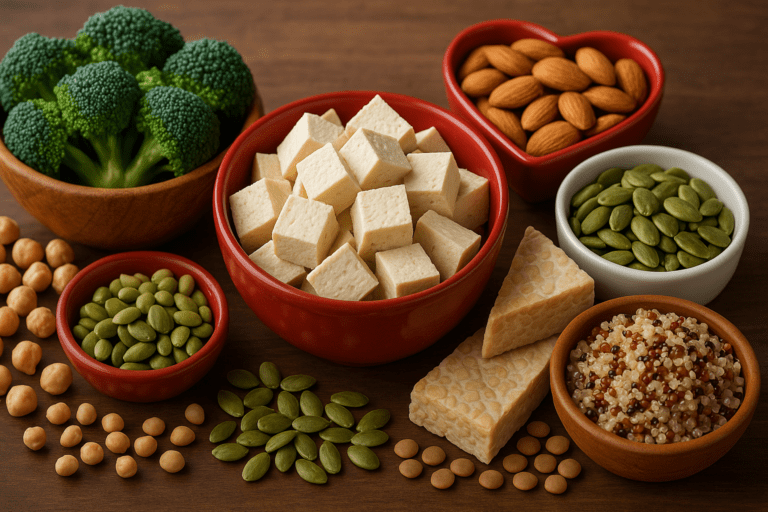
Play exciting online pokies and live games at True Fortune Casino, offering fast payouts, secure deposits, and generous bonuses for Australian players.

Enjoy top pokies and live dealer tables at Uptown Pokies Casino, with quick withdrawals, safe banking, and rewarding promotions for Australian users.

Join thrilling online slots and live casino action at Uptown Aces, featuring fast deposits, secure withdrawals, and exclusive bonuses for Australian players.

Spin favourite pokies and play live casino games at Velvet Spins Casino, offering safe banking, fast payouts, and generous promotions for Australian enthusiasts.

Experience exciting online pokies and live tables at Woo Casino, with quick withdrawals, secure deposits, and attractive bonuses for Australian casino players.

Play top pokies and live dealer games at King Billy Casino, offering fast payouts, safe banking, and rewarding promotions for Australian online casino users.

Enjoy thrilling online slots and live casino action at Aussie Play Casino, with secure deposits, quick withdrawals, and generous bonuses for Australian players.

Join exciting pokies and live tables at Fastpay Casino, featuring fast payouts, safe banking, and exclusive promotions for Australian online casino enthusiasts.